This page provides the current lectures and seminars by the "Stored and Cooled Ions" Division. According to the research fields of the division the course offerings concentrate on Atomic Physics and Quantum Physics.
Precision measurements of atomic and nuclear properties, WS 26/27
Prof. Klaus Blaum, Dr. Liss V. Rodriguez

The lecture begins on Wed., 14. October 2026, at 11:15.
There are two hours lecture (Wed. 11:15-12:45, INF 227 / SR 3.404) and one hour tutorial (Wed. 12:45-13:30, INF 227 / SR 3.404). We start with a preliminary discussion, among others about the course certificate regulations.
NOTE: The lecture will be held in English.
First lecture on Wed., 14.10.2026.
Lecture time: on Wed. 11:15 - 12:45
Lecture place: INF 227 / SR 3.404
Tutorial time: on Wed. 12:45 - 13:30
Tutorial place: INF 227 / SR 3.404
Tutorial classification: heiCO Info | heiCO Course Registration | PhÜ
Lecture information
Event type: Lecture in study course Master of Science (Physics) / MVSpec: Advanced Lecture on Special Topic (Atomic, Molecular and Optical Physics)
Field of study resp. study course: Master of Science (Physics)
Contact hours: 3/week
Type of lesson: Lecture: Precision measurements of atomic and nuclear properties (2 SWS), Tutorial with homework (1 SWS)
Short description:
This course introduces the principles and applications of laser spectroscopy and mass spectrometry for the study of radioactive nuclei and exotic systems. Starting from the basic atomic and nuclear physics required to understand binding energies, hyperfine structure and isotope shifts, the course develops the connection between measured spectra and nuclear ground-state properties such as masses, spin, magnetic dipole moments, electric quadrupole moments, and charge radii.
The course then discusses the detection of neutral and charged particles as well as the production and preparation of radioactive beams, including the ISOL and IGISOL methods, ion sources, mass separation, beam cooling, bunching, and purification. Laser spectroscopy and mass spectrometry techniques are introduced, including in-source laser spectroscopy, collinear laser spectroscopy, collinear resonant ionization spectroscopy, reionization techniques and radioactive detection methods as well as Penning-trap and storage-ring mass spectrometry.
The final part of the course focuses on the interpretation of nuclear moments and charge radii in terms of shell evolution, deformation, shape coexistence, and changes in magic numbers far from stability. Selected case studies from light nuclei, the calcium region, nuclei around Z/N = 50, and heavy nuclei around Z = 82 and N = 126 are discussed. For precision mass measurements applications in nuclear structure studies, neutrino physics and tests of fundamental interactions and their symmetries will be discussed.
Mandatory/advantageous previous knowledge, Target Group: This lecture is intended for both bachelor and master students.
Useful literature: If needed, we will place literature on the lecture subjects at your disposal.
Tutorials or exams: tutorial with homework
Course Certificate-Criterions: at least 50% of the exercises and active participation in the tutorial
ECTS points: 4 ECTS points are granted for the course certificate
Remarks: The lecture material is placed at your disposal online. Master and Doctoral Theses can be written about this subject area.
The lecture notes are available online:
PhÜ Lecture Webpage
Introduction: Welcome and background information
1. Foundation of mass spectrometry and atomic/nuclear binding energies
1.1 Definition of mass uncertainty and resolving power
1.2 Atomic and nuclear binding energies, liquid drop model
1.3. One- and two-neutron separation energies
2. Foundations of laser spectroscopy and nuclear ground-state properties
2.1 Atomic energy levels and angular momentum coupling
2.2 Optical transitions and selection rules
2.3 Spectral lineshapes: natural linewidth, Doppler broadening and power broadening
2.4 Hyperfine structure
2.5 Isotope shifts: mass shift and field shift
2.6 Electromagnetic moments and nuclear charge radii
2.7 Nuclear spin determination from hyperfine spectra
2.8 Ground states, isomeric states, and state-selective spectroscopy
2.9 From measured spectra to nuclear observables: fitting, uncertainties, and systematic effects
3. Detection of neutral and charged particles
3.1 Fluorescent screen and photographic plate
3.2 Faraday detector
3.3 Microchannel plate detector
3.4 Secondary electron multiplier/photomultiplier and channeltron
3.5 Non-destructive detection methods
4. Production and preparation of radioactive beams
4.1 Radioactive-beam production mechanisms: the ISOL and IGISOL methods
4.2 Ion sources, laser ionization, and mass separation
4.3 Beam purification, cooling and bunching: RFQ coolers and buncher
5. Mass spectrometry methods in ion traps and storage rings
5.1 (Multi-reflection) time-of-flight mass spectrometry
5.2 Penning-trap mass spectrometry
5.3 Storage-ring mass spectrometry
6. Precision mass measurements of the building blocks of matter and in the light ion mass region
6.1 Electron / proton / neutron mass measurements
6.2 Light ion masses for neutrino physics
6.3 Mass measurements on nuclear halos
7. Laser spectroscopy methods for radioactive nuclei
7.1 In-source laser spectroscopy
7.2 Collinear laser spectroscopy with optical detection
7.3 Collinear resonant ionization spectroscopy
7.4 Molecular laser spectroscopy
8. Laser spectroscopy in the light-mass region
8.1 Specific challenges in light nuclei
8.2 Small isotope shifts and high-precision requirements
8.3 Halo nuclei and extended matter distributions
8.4 Charge radii of light exotic nuclei
8.5 Laser spectroscopy with continuous beams
8.6 The ROC technique and reionization methods
9. What we learn from electromagnetic moments and charge radii
9.1 The nuclear shell model
9.2 Magic numbers and shell evolution far from stability
9.3 Nuclear deformation and shape coexistence
9.4 Comparison with nuclear models: shell model, mean-field theory, density functional theory, collective models, and ab initio calculations
10. Case studies across the nuclear chart
10.1 Light nuclei and halo systems
10.2 The region around Z/N = 20
10.3 The calcium region: N = 20, 28, 32, and 34 shell evolution
10.4 The region around Z/N = 50
10.5 Neutron-deficient and neutron-rich nuclei near closed shells
10.6 The region around Z = 82 and N = 126
10.7 Heavy and superheavy systems
10.8 Shape coexistence in neutron-deficient lead, mercury, and polonium isotope
11. Precision mass measurements for tests of fundamental symmetries
11.1 CPT test using protons and antiprotons
11.2 Tests of (bound-state) quantum electrodynamics
11.3 Mass measurements for fifth force searches
11.4 Search for the island of stability
Tutorial Classification
Tutorial time: on Wed. 12:45 - 13:30
Tutorial place: INF 227 / SR 3.404
Tutorial classification: heiCO Info | heiCO Course Registration | PhÜ
Tutorial Sheets
Day of issue: on Wed. after the lecture, first date: 21 October 2026
Discussion: during the tutorial in the following week. Each student should be prepared to calculate the exercises.
Webpage: the tutorial sheets are available online in pdf format.
PhÜ Lecture Webpage
Here are several selected links to experiments refering to the topics discussed in this lecture. The list isn't complete at all and represents only a little selection.
Measurements on unstable nuclides
Measurements on stable nuclides
- proton/antiproton mass, … (G. Gabrielse et al.)
- 3H/3He, 4He, proton/electron, … (R.S. Van Dyck et al.)
- light stable nuclei, Rb, Cs … (D. Pritchard et al.)
- SMILETRAP (highly charged ions)
Future Facilities
Advanced seminar, WS26/27: Physics with stored and cooled ions
Prof. Dr. Klaus Blaum, PD Dr. Holger Kreckel, apl. Prof. Dr. Sven Sturm
Usually every fortnight, Wednesday 15:00, Central Seminar Room.
Current dates and information can be found here.
Next seminar: 18.11.2026, 13:00
Arthur Jaries, CERN:
Probing exotic nuclei across the nuclear landscape with high-precision mass spectrometry
► Former lectures and seminars
Further Links:
See also:
Conferences, workshops and schools as well as the open positions related to the research subjects of the division.
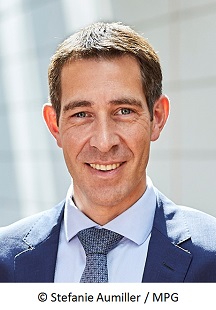
Director
Assistance
Gabriele Weese
Phone +49 6221 516-851
Fax +49 6221 516-852
sekretariat.blaum at mpi-hd.mpg.de