Skip navigation

COLLAPS (CERN)

Our division is involved in the COLLAPS experiment at ISOLDE/CERN in Geneva, which is aimed at the investigation of ground state properties of exotic, short lived nuclei, such as spins, electro-magnetic moments and charge radii by means of collinear laser spectroscopy.
These observables contribute widely to our understanding of the nuclear force – they give valuable information about the coupling between nucleons, about symmetry of the nuclear wave-functions and thus about the symmetry of the nuclear interaction itself.

At COLLAPS (COLlinear LAser sPectroScopy) we observe the tiny changes in atomic energy levels which occur due to interactions with the nucleus, from this we can extract nuclear properties. Thus, our work brings together expertise in atomic and nuclear physics, as determination of nuclear properties from these small changes requires a good understanding of the atomic system. To observe these changes in atomic energy levels we use extremely narrow linewidth lasers to probe the relevant atomic transitions. Typically, the linewidth of these lasers is in the range of one billionth of the energy of the transition. To reach this level of stability for the full range of atomic elements/isotopes studied requires our third area of expertise - laser systems. Our collaboration combines over 40 years of experience in these fields to remain on the cutting edge of laser spectroscopy for the study of radioactive ion beams.


In a nutshell

COLLAPS is an experiment based on the technique of collinear laser spectroscopy (CLS), located at the ISOLDE radioactive beam facility at CERN/Geneva. In CLS ion or atom beams are overlapped with a laser beam in their direction of travel. If the laser frequency matches the frequency of an electronic transition, the ions/atoms will get excited, and start to fluoresce, i.e. emit light. By scanning the laser frequency in the ion/atoms rest frame and observing the fluorescent light, the transition can be precisely mapped out.
Since the nucleus at the core of the atomic system can slightly influence the electronic transitions, the observed splitting and shifts can be used to calculate nuclear properties, in particular the spin, charge radius, magnetic dipole moment and electric quadrupole moment.

In detail

Since the atomic nucleus in an atom influences the atomic energy levels of the surrounding electrons, information about the nucelus can be inferred from precise measurements of these energy levels. The nuclear influence on the atomic levels is typically referred to as the hyperfine structure, and is on the order of one part per million of the total energy of a given orbital, or a few MHz to GHz. The hyperfine structure is split into two contributions, the effect of the nuclear magnetic moments, and the effect of the finite nuclear size (as opposed to the point particle that is typically assumed in an atomic calculation)[??ref]. At COLLAPS, the spin, magnetic dipole moment, electric quadrupole moment and differential charge radius can be determined experimentally from the observation of the hyperfine structure, without prior input from nuclear theory.

A significant experimental challenge for atomic spectroscopy on radioactive nuclei is Doppler broadening, caused by the high temperatures in the ion source (approx. 2300 K). Without further measures, at this temperature the atomic transitions are broadened to a few GHz for a medium mass nucleus, obscuring the details of the hyperfine structure. Cooling, while adequate for stable isotopes, is infeasible since the cooling time would exceed the lifetime of the nuclei under observation. For this reason, the spectroscopy at COLLAPS is not done directly within the ion source, but after the ions are electrostatically accelerated out of the ion source. This acceleration with a constant energy, typically 30 keV to 50 keV, significantly compresses the velocity distribution in beam direction [S.L. Kaufman, Opt. Comm. 17, 309-312 (1976).].

Since the velocity spread is directly proportional to the Doppler broadening, for the aforementioned medium mass nucleus this reduces the residual Doppler broadening to a few MHz. To achieve a similar effect with cooling, the ions would have to be cooled to about 10 mK.

The COLLAPS beamline is thus constructed as follows:

Initially, the ion beam is bunched in the ISCOOL RFQ cooler buncher [??]. While this technically isn't a necessary step, it improves the signal to background ratio by four orders of magnitude, and is thus essential for modern low-yield studies. The ion bunches are then collinearly overlapped with the (continuous) laser beam through an electrostatic deflector. Afterwards, the ion bunches pass several focus and steering optics. The ion bunches can then be neutralized into atom bunches in a charge exchange cell if no favorable, laser-accessible optical transitions are present in the ionic system. Afterwards, they enter the fluorescence detection region. If the ions/atoms and the laser are in resonance the atoms/ions will fluoresce, and the fluorescence light can be detected by single photon detectors mounted to the sides of the beamline. The resonance can be scanned over by decelerating or accelerating the beam before it enters the charge exchange cell, and thus adjusting the frequency of the laser beam in the reference frame of the ion bunch.

The necessary laser light can be produced by a variety of different sources to cover a total wavelength range of 205 nm to 1000 nm, which allows spectroscopy of every element that is produced at ISOLDE. As primary sources, titanium sapphire or dye ring lasers produce a narrowband output between 600 nm and 1000 nm, with a power of up to 6 Watt. To reach the lower wavelength ranges, this light can be frequency doubled with a nonlinear crystal placed in an enhancement cavity, or frequency mixed with a 1550 nm fiber laser. By combining multiple doubling or mixing stages, the entire wavelength range can be covered.

Planned COLLAPS Projects

  • LIAF (Laser Induced Atomic Fluorescence and Ionization)
  • ERC

The COLLAPS experiment offers a unique and enriching environment for students and early-career researchers at all levels. Students have a opportunity to work and participate in experiments at ISOLDE CERN a world-class radioactive ion beam facility. PhD candidates can participate in cutting-edge projects, gaining expertise in spectroscopic techniques and experimental nuclear physics. Postdoctoral researchers will find opportunities to lead innovative research initiatives, push forward technical developments and collaborate with international experts in the field.
For more information or to express interest please contact our spokesperson Prof. Klaus Blaum and/or our local team leader Dr. Liss Vázquez-Rodríguez.


Spokesperson

Prof. Klaus Blaum
MPIK
E-Mail
Webpage

Local team leader

Dr. Liss Vázquez Rodríguez
MPIK, LIAF Group
E-Mail MPIK | E-Mail CERN
Webpage

Meet the local COLLAPS team
 

Team leader

Dr. Liss Vázquez Rodríguez

MPIK

Bd. 3/1-066, CERN, 1211 Geneva 23, Switzerland 
+41 22 767 2783 
liss.vazquez.rodriguez@cern.ch

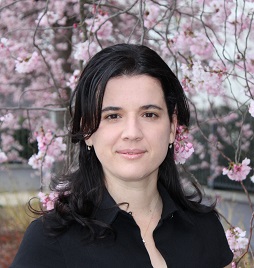
Dr. Liss Vázquez-Rodríguez is the local team leader of the COLLAPS group, dedicated to high resolution collinear laser spectroscopy of short-lived isotopes. She is affiliated with the Max-Planck-Institut für Kernphysik (MPIK) in Heidelberg as a Junior Professor and is permanently placed at the ISOLDE facility, CERN. Her research interests lie in nuclear structure physics, this is prominent through her work on magic tin and lead isotopes. Her more recent work includes the founding of a new LIAF group to expand the scope of COLLAPS and methods of CLS. Further information.

Project Associate

Dr. Deyan Yordanov

IJC Lab, CERN

B3/1-066 ,EP-Dept./ISOLDE, 1211 Geneva 23, Switzerland 
+33 169 153 307 
yordanov@ipno.in2p3.fr

Dr. Deyan Yordanov is a researcher at the Irène Juliot-Curie Lab in Orsay France. He is associated with COLLAPS to work on developments of the LIAF lab. His previous work is focused on the field of laser spectroscopy particularly on cadmium, tin and magnesium isotopes. Further information.

Postdocs

Dr. Peter Plattner

CERN

B26/1-014, EP-Dept./ISOLDE, 1211 Geneva 23, Switzerland 
+43 650 4034 208 
peter.plattner@cern.ch

Dr. Peter Plattner is a research fellow at CERN where he contributes to the COLLAPS experiment at the ISOLDE facility. His previous PhD work was also at ISOLDE for the MIRACLS experiment, of which he is still a collaborator. He has an academic interest in the nuclear properties of aluminium isotopes, particularly regarding its impact on the CKM matrix and those implications on fundamental physics. Further information.

Tim Lellinger

MPIK

B3/1-070 ,EP-Dept./ISOLDE, 1211 Geneva 23, Switzerland 
+41 22 767 2783 
tim.enrico.lellinger@cern.ch

Tim Enrico Lellinger is a postdoctoral researcher affiliated with MPIK and placed at ISOLDE, CERN. Tim is a recent graduate of TU Darmstadt where he completed his PhD work on the high sensitivity ROC technique for the study of neutron rich calcium isotopes and technical developments regarding that project, at ISOLDE. He is currently working as part of the LIAF group to develop new techniques for laser spectroscopy of exotic fluorine isotopes. Further information.

PhD Students

Edward Matthews

TU Darmstadt, CERN

B3/1-070 ,EP-Dept./ISOLDE, 1211 Geneva 23, Switzerland 
+41 22 767 2783 
edward.noel.matthews@cern.ch

Edward Matthews is a PhD student at TU Darmstadt placed as a CERN doctoral student at ISOLDE to work on the COLLAPS experiment. His work includes data analysis of the neutron deficient thallium COLLAPS run and developments of new ion sources for offline testing and developments. He is a graduate of the University of Edinburgh where he recieved his masters in Nuclear and Particle physics including thesis work on RF carpets and stopping cells.

Jack Hughes

University of Liverpool

B3/1-070 ,EP-Dept./ISOLDE, 1211 Geneva 23, Switzerland 
+41 22 767 2783 
jbh@ns.ph.liv.ac.uk

Jack Hughes is a PhD student at the University of Liverpool. He is currently placed at the COLLAPS experiment as part of one year long term attachment. His PhD work focuses on the study of neutron deficient Thulium isotopes. His masters project was also in the field of laser spectroscopy analysing neutron deficient lead.

Masters students

Till Fabritz

TU Darmstadt

S2|14 22 Schlossgartenstraße 9 64289 Darmstadt 
+49 6151 16-23576 
tfabritz@ikp.tu-darmstadt.de

Till Fabritz is a masters student at the technical university of Darmstadt. He is placed at CERN to work on the developments of a new offline lab, its laser system and ion source. His bachelors thesis focused on developments of diode lasers.

Ronaldo Mendez-Hernandez

University of Havana, MPIK

B3/1-066, EP-Dept./ISOLDE, 1211 Geneva 23, Switzerland 
+41 22 767 2783 
ronaldo.rigoberto.mendez.hernandez@cern.ch

Ronaldo Mendez-Hernandez is a masters student at the University of Havana, working at the MPIK and currently placed at CERN to participate in developments of the new offline lab and work at COLLAPS. His previous studies included Rutherford backscattering on thin films and his bachelors thesis concerned the affects of electron radiation on the formation of carbon nano-onions.

Sonya Dutton

University of Heidelberg, MPIK

EP-Dept./ISOLDE, 1211 Geneva 23, Switzerland 
+41 22 767 2783

Sonya Dutton is a masters student at the MPIK who will be working at COLLAPS as part of her masters studies. She has previously studied at Williams college, Massachusetts, where she recieved her bachelors after completing her thesis on trapped Strontium ion quantum simulations. She worked at COLLAPS in 2023 as part of a six month placement. Her work will focus on ion transport simulations.

Spokesperson

Prof. Klaus Blaum

Max-Planck-Institut für Kernphysik

Saupfercheckweg 1, 69117 Heidelberg, Germany 
+49 62 21 516 850 
klaus.blaum@mpi-hd.mpg.de

Professor Klaus Blaum is the spokesperson of the COLLAPS experiment. He is director of the "Stored and Cooled Ions" group at the Max Planck Institute for Nuclear Physics (Max-Planck-Institut für Kernphysik) in Heidelberg, where he has made significant contributions to precision experiments related to atomic and nuclear masses. He has had a sustained interest in experimental physics at ISOLDE CERN though his commitments to the COLLAPS and ISOLTRAP experiments. Further information.

Collaborators

Prof. Wilfried Nörtershäuser

Technische Universität Darmstadt, Institut für Kernphysik

Institut für Kernphysik, S2|14 410, Schlossgartenstraße 9, 64289 Darmstadt, Germany 
+49 6151 16-23575 
wnoertershaeuser@ikp.tu-darmstadt.de

Wilfried Nörtershäuser is a professor at the Institut für Kernphysik, TU Darmstadt. His work focuses on experimental nuclear and atomic physics, particularly in the field of laser spectroscopy. His research involves studies of atomic physics and nuclear structure, including precision measurements at his on site lab KOALA and studies of shortlived radioactive nuclides through collaborations. He leads the LaserSpHERe group focused on studies in these fields. Further information.

Prof. Gerda Neyens

KU Leuven, Instituuut voor Kern- en Stralingsfysica,

Celestijnenlaan 200D, 3001 Leuven, Belgium 
+32 1632 7261 
gerda.neyens@kuleuven.be

Gerda Neyens is professor at the Institute for Nuclear and Radiation Physics, KU Leuven. She is known for her work in nuclear structure and hyperfine interactions using radioactive ion beams. Neyens has conducted significant research at leading facilities such as ISOLDE at CERN, where she has been involved in laser spectroscopy experiments on radioactive ion beams. As a professor and researcher, Neyens has contributed to scientific literature in this field and runs an active group of students and younger researchers in the field of nuclear physics. Further information.

Prof. Rainer Neugart

J. Gutenberg Universität Mainz

Institut für Kernchemie, 55099 Mainz, Germany 
+49 6131 3922 608 
neugart@uni-mainz.de

Rainer Neugart is a retired academic researcher from Gutenberg University Mainz. He has contributed much on the topics of nuclear hyperfine structure & laser spectroscopy. He is an important founder in this field and has participated in studies at COLLAPS since the 1980's. He is an emeritus professor and participates in the collaboration wherever possible. Further information.

Prof. Bradley Cheal

University of Liverpool

Nuclear Physics Group, Oxford Street, L69 7ZE Liverpool, UK 
+44 (0)151 794 3376 
Bradley.Cheal@liverpool.ac.uk

Bradley Cheal is a professor at the University of Liverpool, where he is head of teaching in the physics department. He specialises in experimental nuclear physics and has a sustained interest in collinear laser spectroscopy. He maintains active collaborations with COLLAPS ISOLDE and IGISOL in Jyvaskylla for the study of radiactive ion beams. Further information.

Dr. Rodolfo Sanchez

GSI Helmholtz Centre for Heavy Ion research

Atomic Physics Group, Planckstraße 1, 64291 Darmstadt, Germany Room: SB3 2.265a 
+49 6159 71 2090 
R.Sanchez@GSI.DE

Dr. Rodolfo Sanchez is associated with the GSI Helmholtz Centre for Heavy Ion Research, a research facility in Germany focused on heavy ion physics. The GSI Centre conducts advanced research in nuclear physics, hadron and ion research, and related fields. His research focuses on laser spectroscopy of highly charged ions in storage rings. Further information.

Prof. Ronald F. Garcia Ruiz

MIT

B26-427 Compton Laboratories, MIT, USA 
+41 22 767 2783 
ronald.fernando.garcia.ruiz@cern.ch

Dr. Ronald Fernando Garcia Ruiz is an Assistant Professor at the Department of Physics at MIT. His research activities are focused on developing laser spectroscopy techniques to investigate the properties of subatomic particles using atoms and molecules made up of short-lived radioactive nuclei. His experimental work provides unique information about the fundamental forces of nature, the properties of nuclear matter at the limits of existence, and the search for new physics beyond the Standard Model of particle physics. Further information.

Prof. Xiaofei Yang

Peking University

School of Physics and State Key Laboratory of Nuclear Physics and Technology, China 
+41 22 767 2783 
xiaofei.yang@pku.edu.cn

Dr. Xiaofei Yang is an assistant professor at Peking University. Her main research topics are the development of high-precision and high-sensitivity laser spectroscopy techniques and the associated structure studies of exotic nuclei. She received her P.h.D. degree in nuclear physics from Peking University, China, in 2014. Further information.

Max Planck Institute for Nuclear Physics

mpi-hd.mpg.de

Saupfercheckweg 1, 69117 Heidelberg, Germany
+49 6221 5160

The institute is one of the 80 institutes of the Max-Planck-Gesellschaft (Max Planck Society), an independent, non-profit research organization. The Max Planck Institute for Nuclear Physics was founded in 1958 under the leadership of Wolfgang Gentner. Its precursor was the Institute for Physics at the MPI for Medical Research. Today, the institute's research areas are: crossroads of particle physics and astrophysics (astroparticle physics) and many-body dynamics of atoms and molecules (quantum dynamics).

Technische Universität Darmstadt

ikp.tu-darmstadt.de

Karolinenpl. 5, 64289 Darmstadt, Germany
+49 6151 1601

The Institut für Kernphysik (IKP) is part of the Technical University of Darmstadt in Hesse, Germany. Studies at the IKP focus on nuclear structure physics, nuclear astrophysics, relativistic heavy-ion physics, plasma physics, astro-particle physics, accelerator physics and related fields in experimental and theoretical groups. The IKP operates the Superconducting Darmstadt Linear Accelerator (S-DALINAC), various detector and target laboratories as well as a Theory Centre.

Katholieke Universiteit Leuven

fys.kuleuven.be/english

Celestijnenlaan 200d - bus 2412, 3001 Leuven, Belgium
+49 6151 1601

The Department of Physics and Astronomy at KU Leuven is a leading research institution exploring everything from subatomic particles to the vast cosmos. With seven specialized research units, it covers areas such as quantum physics, nuclear physics, soft matter, semiconductor physics, and astronomy. The department is renowned for its expertise in stellar evolution, asteroseismology, and exoplanet research. It offers high-quality education in physics and astronomy, fostering interdisciplinary studies and innovative research.

Irène Joliot-Curie Laboratory

ijclab.in2p3.fr

Laboratoire Irène Joliot Curie, 15 Rue Georges Clemenceau, 91400 Orsay, France
+ 33 1 69 15 41 00

The “Laboratoire de Physique des 2 Infinis Irène Joliot-Curie” (Laboratory of the Physics of the two Infinities Irène Joliot-Curie) or IJCLab, is a joint research unit of CNRS, Université Paris-Saclay and Université Paris-Cité, located on the Orsay campus. The scientific activities of IJCLab are organised around 7 scientific poles : Astroparticles, Astrophysics and Cosmology; Accelerator Physics, High-Energy Physics; Nuclear Physics, Theoretical Physics, Energy and Environment, Health Physics.

University of Liverpool

liverpool.ac.uk

Foundation Building, Brownlow Hill, Liverpool L69 7ZX, United Kingdom
+44 151 794 2000

The University of Liverpool (abbreviated UOL) is a public research university in Liverpool, England. Founded as a college in 1881, it gained its Royal Charter in 1903 with the ability to award degrees, and is also known to be one of the six 'red brick' civic universities, the first to be referred to as The Original Red Brick. It comprises three faculties organised into 35 departments and schools. It is a founding member of the Russell Group, the N8 Group for research collaboration and the university management school is triple crown accredited.

Ten Nobel Prize winners are amongst its alumni and past faculty and the university offers more than 230 first degree courses across 103 subjects. Its alumni include the CEOs of GlobalFoundries, ARM Holdings, Tesco, Motorola and The Coca-Cola Company.

GSI Helmholtz Centre for Heavy Ion Research

gsi.de

GSI Helmholtzzentrum für Schwerionenforschung GmbH, Planckstraße 1, 64291 Darmstadt, Germany
+49 6159 71 0

The GSI Helmholtz Centre for Heavy Ion Research (German: GSI Helmholtzzentrum für Schwerionenforschung) is a federally and state co-funded heavy ion (Schwerion [de]) research center in the Wixhausen suburb of Darmstadt, Germany. It was founded in 1969 as the Society for Heavy Ion Research (German: Gesellschaft für Schwerionenforschung), abbreviated GSI, to conduct research on and with heavy-ion accelerators. It is the only major user research center in the State of Hesse.

The laboratory performs basic and applied research in physics and related natural science disciplines. Main fields of study include plasma physics, atomic physics, nuclear structure and reactions research, biophysics and medical research. The lab is a member of the Helmholtz Association of German Research Centres.

Peking University

english.pku.edu.cn

5 Yiheyuan Rd, Haidian District, Beijing, China, 100871
+86 10 6275 1201

Peking University (abbreviated PKU or Beida) is a public university in Haidian, Beijing, China. It is affiliated with and funded by the Ministry of Education of China. Peking University has six faculties, namely Humanities, Social Sciences, Economics and Management, Science, Information Technology and Engineering, as well as Health Science. It consists of 55 schools and departments, 60 research entities, and ten affiliated hospitals. By 2017, Peking University's staff include 76 academicians of the Chinese Academy of Sciences, 19 members of the Chinese Academy of Engineering and 25 members of the World Academy of Sciences.


PhD Theses
 
Charge Radii of Zn and Ni Isotopes Measured by Collinear Laser Spectroscopy 

Liang Xie 
University of Manchester, 2018

The Evolution of Nuclear Structure in Odd-A Zinc Isotopes 

Calvin Wraith 
University of Liverpool, 2018

Kollineare Laserspektrosckopie an Calcium und Zinn an TRIGA-LASER und ISOLDE 

Christian Gorges 
TU Darmstadt, 2017

Ground state properties near the N = 20 and N = 40 islands of inversion 

Hanne Heylen 
KU Leuven, 2016

Collinear Laser Spectroscopy of Manganese Isotopes using the Radio Frequency Quadrupole Cooler and Buncher at ISOLDE 

Carla Babcock 
University of Liverpool, 2015

Collinear Laser Spectroscopy on exotic Ca isotopes towards new magic numbers N=32 and N=34 

Ronald Fernando Garcia Ruiz 
KU Leuven, 2015

Structure of potassium isotopes studied with collinear laser spectroscopy 

Jasna Papuga 
KU Leuven, 2015

Collinear Laser Spectroscopy of Potassium : Nuclear Charge Radii beyond N = 28 

Kim Kreim 
Ruprecht-Karls-Universität Heidelberg, 2013

Laser systems for collinear spectroscopy and the charge radius of 12Be 

Andreas Krieger 
Johannes Gutenberg-Universität Mainz, 2012

Nuclear structure of Cu isotopes studied with collinear laser spectroscopy 

Pieter Vingerhoets 
KU Leuven, 2011

Construction and Commissioning of a Collinear Laser Spectroscopy Setup at TRIGA Mainz and Laser Spectroscopy of Magnesium Isotopes at ISOLDE (CERN)

Jörg Krämer 
Johannes Gutenberg-Universität Mainz, 2010

From 27Mg to 33Mg: transition to the Island of inversion 

Deyan T. Yordanov 
KU Leuven, 2007

Precision moments of the 11Li halo nucleus 

Dana Borremans 
KU Leuven, 2004

Nuclear Moments and Differences in Mean Square Charge Radii of Short-Lived Neon Isotopes by Collinear Laser Spectroscopy

Wolfgang Geithner 
Johannes Gutenberg-Universität Mainz, 2002

Messung der Kernquadrupolmomente neutronenreicher Natriumisotope

Matthias Keim 
Johannes Gutenberg-Universität Mainz, 1996

63Charge Radii Measurements of Exotic Tin Isotopes in the Proximity of N = 50 and N = 82

F. P. Gustafsson, L. V. Rodríguez, R. F. Garcia Ruiz, T. Miyagi, S. W. Bai, D. L. Balabanski, C. L. Binnersley, M. L. Bissell, K. Blaum, B. Cheal, T. E. Cocolios, G. J. Farooq-Smith, K. T. Flanagan, S. Franchoo, A. Galindo-Uribarri, G. Georgiev, W. Gins, C. Gorges, R. P. de Groote, H. Heylen, J. D. Holt, A. Kanellakopoulos, J. Karthein, S. Kaufmann, Á. Koszorús, K. König, V. Lagaki, S. Lechner, B. Maass, S. Malbrunot-Ettenauer, W. Nazarewicz, R. Neugart, G. Neyens, W. Nörtershäuser, T. Otsuka, P.. Reinhard, N. Rondelez, E. Romero-Romero, C. M. Ricketts, S. Sailer, R. Sánchez, S. Schmidt, A. Schwenk, S. R. Stroberg, N. Shimizu, Y. Tsunoda, A. R. Vernon, L. Wehner, S. G. Wilkins, C. Wraith, L. Xie, ... and D. T. Yordanov
Physical Review Letters 135, 222501 (2025)

62Reduction in Nuclear Size and Quadrupole Deformation of High-Spin Isomers of 127,129In

A. R. Vernon, C. L. Binnersley, R. F. Garcia Ruiz, K. M. Lynch, T. Miyagi, J. Billowes, M. L. Bissell, T. E. Cocolios, J. P. Delaroche, J. Dobaczewski, M. Dupuis, K. T. Flanagan, W. Gins, M. Girod, G. Georgiev, R. P. de Groote, J. D. Holt, J. Hustings, Á. Koszorús, D. Leimbach, J. Libert, W. Nazarewicz, G. Neyens, N. Pillet, P.. Reinhard, S. Rothe, B. K. Sahoo, S. R. Stroberg, S. G. Wilkins, X. F. Yang, Z. Y. Xu, and D. T. Yordanov
Physical Review Letters 134, 252501 (2025)

61Charge Radii of Neutron-Rich Scandium Isotopes and the Seniority Symmetry in the 0f7/2 Shell

S. W. Bai, X. F. Yang, Á. Koszorús, J. C. Berengut, J. Billowes, M. L. Bissell, K. Blaum, A. Borschevsky, P. Campbell, B. Cheal, C. S. Devlin, K. T. Flanagan, R. F. Garcia Ruiz, H. Heylen, J. D. Holt, B. S. Hu, A. Kanellakopoulos, J. Krämer, V. Lagaki, B. Maaß, S. Malbrunot-Ettenauer, T. Miyagi, K. König, M. Kortelainen, W. Nazarewicz, R. Neugart, G. Neyens, W. Nörtershäuser, P.. Reinhard, M. L. Reitsma, L. V. Rodríguez, F. Sommer, and Z. Y. Xu
Physical Review Letters 134, 182501 (2025)

60Electromagnetic properties of indium isotopes illuminate the doubly magic character of 100Sn

J. Karthein, C. M. Ricketts, R. F. Garcia Ruiz, J. Billowes, C. L. Binnersley, T. E. Cocolios, J. Dobaczewski, G. J. Farooq-Smith, K. T. Flanagan, G. Georgiev, W. Gins, R. P. de Groote, F. P. Gustafsson, J. D. Holt, A. Kanellakopoulos, Á. Koszorús, D. Leimbach, K. M. Lynch, T. Miyagi, W. Nazarewicz, G. Neyens, P.. Reinhard, B. K. Sahoo, A. R. Vernon, S. G. Wilkins, X. F. Yang, and D. T. Yordanov
Nature Physics 20, 1719-1725 (2024)

59Nuclear charge radii of germanium isotopes around N = 40

S.. Wang, A. Kanellakopoulos, X.. Yang, S.. Bai, J. Billowes, M.. Bissell, K. Blaum, B. Cheal, C.. Devlin, R.. Garcia Ruiz, J.. Han, H. Heylen, S. Kaufmann, K. König, Á. Koszorús, S. Lechner, S. Malbrunot-Ettenauer, W. Nazarewicz, R. Neugart, G. Neyens, W. Nörtershäuser, T. Ratajczyk, P.. Reinhard, L. V. Rodríguez, S. Sels, L. Xie, Z.. Xu, D.. Yordanov, and Y.. Yu
Physics Letters B 856, 138867 (2024)
 Corrigendum

58Electromagnetic moments of the odd-mass nickel isotopes 59−67Ni

P. Müller, S. Kaufmann, T. Miyagi, J. Billowes, M.. Bissell, K. Blaum, B. Cheal, R.. Garcia Ruiz, W. Gins, C. Gorges, H. Heylen, A. Kanellakopoulos, S. Malbrunot-Ettenauer, R. Neugart, G. Neyens, W. Nörtershäuser, T. Ratajczyk, L. V. Rodríguez, R. Sánchez, S. Sailer, A. Schwenk, L. Wehner, C. Wraith, L. Xie, Z.. Xu, X.. Yang, and D.. Yordanov
Physics Letters B 854, 138737 (2024)

57Electromagnetic moments of the antimony isotopes 112−133Sb

S. Lechner, T. Miyagi, Z.. Xu, M.. Bissell, K. Blaum, B. Cheal, C.. Devlin, R.. Garcia Ruiz, J... Ginges, H. Heylen, J.. Holt, P. Imgram, A. Kanellakopoulos, Á. Koszorús, S. Malbrunot-Ettenauer, R. Neugart, G. Neyens, W. Nörtershäuser, P. Plattner, L. V. Rodríguez, G. Sanamyan, S.. Stroberg, Y. Utsuno, X.. Yang, and D.. Yordanov
Physics Letters B 847, 138278 (2023)

56Nuclear Charge Radius of 26mAl and Its Implication for Vud in the Quark Mixing Matrix

P. Plattner, E. Wood, L. Al Ayoubi, O. Beliuskina, M. L. Bissell, K. Blaum, P. Campbell, B. Cheal, R. P. de Groote, C. S. Devlin, T. Eronen, L. Filippin, R. F. Garcia Ruiz, Z. Ge, S. Geldhof, W. Gins, M. Godefroid, H. Heylen, M. Hukkanen, P. Imgram, A. Jaries, A. Jokinen, A. Kanellakopoulos, A. Kankainen, S. Kaufmann, K. König, Á. Koszorús, S. Kujanpää, S. Lechner, S. Malbrunot-Ettenauer, †. Müller, R. Mathieson, I. Moore, W. Nörtershäuser, D. Nesterenko, R. Neugart, G. Neyens, A. Ortiz-Cortes, H. Penttilä, I. Pohjalainen, A. Raggio, M. Reponen, S. Rinta-Antila, L. V. Rodríguez, J. Romero, R. Sánchez, F. Sommer, M. Stryjczyk, V. Virtanen, L. Xie, Z. Y. Xu, ... and D. T. Yordanov
Physical Review Letters 131, 222502 (2023)

55Electromagnetic moments of scandium isotopes and N = 28 isotones in the distinctive 0f7/2 orbit

S. W. Bai, Á. Koszorús, B. S. Hu, X. F. Yang, J. Billowes, C. L. Binnersley, M. L. Bissell, K. Blaum, P. Campbell, B. Cheal, T. E. Cocolios, R. P. de Groote, C. S. Devlin, K. T. Flanagan, R. F. G. Ruiz, H. Heylen, J. D. Holt, A. Kanellakopoulos, J. Krämer, V. Lagaki, B. Maaß, S. Malbrunot-Ettenauer, T. Miyagi, R. Neugart, G. Neyens, W. Nörtershäuser, L. V. Rodríguez, F. Sommer, A. R. Vernon, S. J. Wang, X. B. Wang, S. G. Wilkins, Z. Y. Xu, and C. X. Yuan
Physics Letters B 829, 137064 (2022)

54Nuclear Charge Radii of the Nickel Isotopes 58−68,70Ni

S. Malbrunot-Ettenauer, S. Kaufmann, S. Bacca, C. Barbieri, J. Billowes, M. L. Bissell, K. Blaum, B. Cheal, T. Duguet, R. F. Garcia Ruiz, W. Gins, C. Gorges, G. Hagen, H. Heylen, J. D. Holt, G. R. Jansen, A. Kanellakopoulos, M. Kortelainen, T. Miyagi, P. Navrátil, W. Nazarewicz, R. Neugart, G. Neyens, W. Nörtershäuser, S. J. Novario, T. Papenbrock, T. Ratajczyk, P. -. Reinhard, L. V. Rodríguez, R. Sánchez, S. Sailer, A. Schwenk, J. Simonis, V. Somà, S. R. Stroberg, L. Wehner, C. Wraith, L. Xie, Z. Y. Xu, X. F. Yang, and D. T. Yordanov
Physical Review Letters 128, 022502 (2022)

53Probing the single-particle behavior above 132Sn via electromagnetic moments of 133,134Sb and N=82 isotones

S. Lechner, Z. Y. Xu, M. L. Bissell, K. Blaum, B. Cheal, G. D. Gregorio, C. S. Devlin, R. F. Garcia Ruiz, A. Gargano, H. Heylen, P. Imgram, A. Kanellakopoulos, Á. Koszorús, S. Malbrunot-Ettenauer, R. Neugart, G. Neyens, W. Nörtershäuser, P. Plattner, L. V. Rodríguez, X. F. Yang, and D. T. Yordanov
Physical Review C 104, 014302 (2021)

52High-resolution laser spectroscopy of 27-32Al

H. Heylen, C. S. Devlin, W. Gins, M. L. Bissell, K. Blaum, B. Cheal, L. Filippin, R. F. Garcia Ruiz, M. Godefroid, C. Gorges, J. D. Holt, A. Kanellakopoulos, S. Kaufmann, Á. Koszorús, K. König, S. Malbrunot-Ettanauer, T. Miyagi, R. Neugart, G. Neyens, W. Nörtershäuser, R. Sánchez, F. Sommer, L. V. Rodríguez, L. Xie, Z. Y. Xu, X. F. Yang, and D. T. Yordanov
Physical Review C 103, 014318 (2021)

51Nuclear moments of germanium isotopes near N=40

A. Kanellakopoulos, X. F. Yang, M. L. Bissell, M. L. Reitsma, S. W. Bai, J. Billowes, K. Blaum, A. Borschevsky, B. Cheal, C. S. Devlin, R. F. Garcia Ruiz, H. Heylen, S. Kaufmann, K. König, Á. Koszorús, S. Lechner, S. Malbrunot-Ettenauer, R. Neugart, G. Neyens, W. Nörtershäuser, T. Ratajczyk, L. V. Rodríguez, S. Sels, S. J. Wang, L. Xie, Z. Y. Xu, and D. T. Yordanov
Physical Review C 102, 054331 (2020)

50Doubly-magic character of 132Sn studied via electromagnetic moments of 133Sn

L. V. Rodríguez, D. L. Balabanski, M. L. Bissell, K. Blaum, B. Cheal, G. D. Gregorio, J. Ekman, R. F. Garcia Ruiz, A. Gargano, G. Georgiev, W. Gins, C. Gorges, H. Heylen, A. Kanellakopoulos, S. Kaufmann, V. Lagaki, S. Lechner, B. Maaß, S. Malbrunot-Ettenauer, R. Neugart, G. Neyens, W. Nörtershäuser, S. Sailer, R. Sánchez, S. Schmidt, L. Wehner, C. Wraith, L. Xie, Z. Y. Xu, ∥, X. F. Yang, and D. T. Yordanov
Physical Review C 102, 051301(R) (2020)

49Structural trends in atomic nuclei from laser spectroscopy of tin

D. T. Yordanov, L. V. Rodríguez, D. L. Balabanski, J. Bieroń, M. L. Bissell, K. Blaum, B. Cheal, J. Ekman, G. Gaigalas, R. F. G. Ruiz, G. Georgiev, W. Gins, M. R. Godefroid, C. Gorges, Z. Harman, H. Heylen, P. Jönsson, A. Kanellakopoulos, S. Kaufmann, C. H. Keitel, V. Lagaki, S. Lechner, B. Maaß, S. Malbrunot-Ettenauer, W. Nazarewicz, R. Neugart, G. Neyens, W. Nörtershäuser, N. S. Oreshkina, A. Papoulia, P. Pyykkö, P. Reinhard, S. Sailer, R. Sánchez, S. Schiffmann, S. Schmidt, L. Wehner, C. Wraith, L. Xie, Z. Xu, and X. Yang
Communications Physics 3, 107 (2020)

48Charge radius of the short-lived 68Ni and correlation with the dipole polarizability

S. Kaufmann, J. Simonis, S. Bacca, J. Billowes, M. L. Bissell, K. Blaum, B. Cheal, R. F. Garcia Ruiz, W. Gins, C. Gorges, G. Hagen, H. Heylen, A. Kanellakopoulos, S. Malbrunot-Ettenauer, M. Miorelli, R. Neugart, G. Neyens, W. Nörtershäuser, R. Sánchez, S. Sailer, A. Schwenk, T. Ratajczyk, L. V. Rodríguez, L. Wehner, C. Wraith, L. Xie, Z. Y. Xu, X. F. Yang, and D. T. Yordanov
Physical Review Letters 124, 132502 (2020)

47Nuclear charge radii of 62−80Zn and their dependence on cross-shell proton excitations

L. Xie, X.. Yang, C. Wraith, C. Babcock, J. Bieroń, J. Billowes, M.. Bissell, K. Blaum, B. Cheal, L. Filippin, K.. Flanagan, R.. Ruiz Garcia, W. Gins, G. Gaigalas, M. Godefroid, C. Gorges, L.. Grob, H. Heylen, P. Jönsson, S. Kaufmann, M. Kowalska, J. Krämer, S. Malbrunot-Ettenauer, R. Neugart, G. Neyens, W. Nörtershäuser, T. Otsuka, J. Papuga, Y. Sanchez, R. Tsunoda, and D.. Yordanov
Physics Letters B 797, 134805 (2019)

46Quadrupole Moments of 29Mg and 33Mg

D. T. Yordanov, M. Kowalska, K. Blaum, M. De Rydt, K. T. Flanagan, P. Himpe, P. Lievens, S. Mallion, R. Neugart, G. Neyens, N. Vermeulen, and H. Stroke
Hyperfine Interactions 240, 67 (2019)

45Hyperfine structure and nuclear magnetic moments of the praseodymium isotopes135,136,137Pr

N. Frömmgen, W. Nörtershäuser, M. L. Bissell, K. Blaum, C. Geppert, M. Hammen, M. Kowalska, J. Krämer, K. D. Kreim, A. Krieger, Y. A. Litvinov, R. Neugart, G. Neyens, J. Papuga, R. Sánchez, and D. T. Yordanov
Hyperfine Interactions 240, 66 (2019)

44Laser Spectroscopy of Neutron-Rich Tin Isotopes: A Discontinuity in Charge Radii across the N = 82 Shell Closure

C. Gorges, L. V. Rodríguez, D. L. Balabanski, M. L. Bissell, K. Blaum, B. Cheal, R. F. G. Ruiz, G. Georgiev, W. Gins, H. Heylen, A. Kanellakopoulos, S. Kaufmann, M. Kowalska, V. Lagaki, S. Lechner, B. Maaß, S. Malbrunot-Ettenauer, W. Nazarewicz, R. Neugart, G. Neyens, W. Nörtershäuser, P.. Reinhard, S. Sailer, R. Sánchez, S. Schmidt, L. Wehner, C. Wraith, L. Xie, Z. Y. Xu, X. F. Yang, and D. T. Yordanov
Physical Review Letters 122, 192502 (2019)

43From Calcium to Cadmium: Testing the Pairing Functional through Charge Radii Measurements of 100-130Cd

M. Hammen, W. Nörtershäuser, D. L. Balabanski, M. L. Bissell, K. Blaum, I. Budinčević, B. Cheal, K. T. Flanagan, N. Frömmgen, G. Georgiev, C. Geppert, M. Kowalska, S. W. Kreim, A. Krieger, W. Nazarewicz, R. Neugart, G. Neyens, J. Papuga, P.. Reinhard, M. M. Rajabali, S. Schmidt, and D. T. Yordanov
Physical Review Letters 121, 102501 (2018)

42Spins and electromagnetic moments of 101-109Cd

D. T. Yordanov, D. L. Balabanski, M. L. Bissell, K. Blaum, A. Blazhev, I. Budinčević, N. Frömmgen, C. Geppert, H. Grawe, M. Hammen, S. W. Kreim, R. Neugart, G. Neyens, and W. Nörtershäuser
Physical Review C 98, 011303 (2018)

41Investigating the large deformation of the 5/2+ isomeric state in 73Zn: An indicator for triaxiality

X.. Yang, Y. Tsunoda, C. Babcock, J. Billowes, M.. Bissell, K. Blaum, B. Cheal, K.. Flanagan, R.. G. Ruiz, W. Gins, C. Gorges, L.. Grob, H. Heylen, S. Kaufmann, M. Kowalska, J. Kraemer, S. Malbrunot-Ettenauer, R. Neugart, G. Neyens, W. Nörtershäuser, T. Otsuka, J. Papuga, R. Sánchez, C. Wraith, L. Xie, and D.. Yordanov
Physical Review C 97, 044324 (2018)

40The nuclear magnetic moment of 208Bi and its relevance for a test of bound-state strong-field QED

S. Schmidt, J. Billowes, M.. Bissell, K. Blaum, R.. Garcia Ruiz, H. Heylen, S. Malbrunot-Ettenauer, G. Neyens, W. Nörtershäuser, G. Plunien, S. Sailer, V.. Shabaev, L.. Skripnikov, I.. Tupitsyn, A.. Volotka, and X.. Yang
Physics Letters B 779, 324-330 (2018)

39Nuclear moments of the low-lying isomeric 1(+) state of Al-34: Investigation on the neutron 1p1h excitation across N=20 in the island of inversion

Z. Y. Xu, H. Heylen, K. Asahi, F. Boulay, J. M. Daugas, R. P. de Groote, W. Gins, O. Kamalou, A. Koszorus, M. Lykiardopoulou, T. J. Mertzimekis, G. Neyens, H. Nishibata, T. Otsuka, R. Orset, A. Poves, T. Sato, C. Stodel, J. C. Thomas, N. Tsunoda, Y. Utsuno, M. Vandebrouck, and X. F. Yang
Physics Letters B 782, 619-626 (2018)

38New laser polarization line at the ISOLDE facility

M. Kowalska, P. Aschenbrenner, M. Baranowski, M. L. Bissell, W. Gins, R. D. Harding, H. Heylen, G. Neyens, S. Pallada, N. Severijns, P. Velten, M. Walczak, F Wienholtz, Z. Y. Xu, X. F. Yang, and D. Zakoucky
Journal of Physics G: Nuclear and Particle Physics 44, 084005 (2017)

37Evolution of nuclear structure in neutron-rich odd-Zn isotopes and isomers

C. Wraith, X.. Yang, L. Xie, C. Babcock, J. Bierón, J. Billowes, M.. Bissell, K. Blaum, B. Cheal, L. Filippin, R.. G. Ruiz, W. Gins, L.. Grob, G. Gaigalas, M. Godefroid, C. Gorges, H. Heylen, M. Honma, P. Jönsson, S. Kaufmann, M. Kowalska, J. Krämer, S. Malbrunot-Ettenauer, R. Neugart, G. Neyens, W. Nörtershäuser, F. Nowacki, T. Otsuka, J. Papuga, R. Sánchez, Y. Tsunoda, and D.. Yordanov
Physics Letters B 771, 385-391 (2017)

36Spin and Magnetic Moment of 23Mg

D. Yordanov, M. L. Bissell, K. Blaum, M. D. Rydt, C. Geppert, J. Krämer, S. W. Kreim, M. Kowalska, A. Krieger, P. Lievens, R. Neugart, G. Neyens, W. Nörtershäuser, L. V. Rodríguez, R. Sánchez, and P. Vingerhoets
Journal of Physics G: Nuclear and Particle Physics 44, 075104 (2017)

35Collinear laser spectroscopy at ISOLDE: new methods and highlights

R. Neugart, J. Billowes, M. L. Bissell, K. Blaum, B. Cheal, K. T. Flanagan, G. Neyens, W. Nörtershäuser, and D. T. Yordanov
Journal of Physics G: Nuclear and Particle Physics 44, 064002 (2017)

34Development of a sensitive setup for laser spectroscopy studies of very exotic calcium isotopes

R. F. Ruiz Garcia, C. Gorges, M. Bissell, K. Blaum, W. Gins, H. Heylen, K. Koenig, S. Kaufmann, M. Kowalska, J. Krämer, P. Lievens, S. Malbrunot-Ettenauer, R. Neugart, G. Neyens, W. Nörtershäuser, D. T. Yordanov, and X. F. Yang
Journal of Physics G: Nuclear and Particle Physics 44, 044003 (2017)

33Frequency‑comb referenced collinear laser spectroscopy of Be+ for nuclear structure investigations and many‑body QED tests.

A. Krieger, W. Nörtershäuser, C. Geppert, K. Blaum, M. L. Bissell, N. Frömmgen, M. Hammen, K. Kreim, M. Kowalska, J. Krämer, R. Neugart, G. Neyens, R. Sánchez, D. Tiedemann, D. T. Yordanov, and M. Zakova.
Applied Physics B: Lasers and Optics 123, 15 (2017)

32Changes in nuclear structure along the Mn isotopic chain studied via charge radii.

H. Heylen, C. Babcock, R. Beerwerth, J. Billowes, M. L. Bissell, K. Blaum, J. Bonnard, P. Campbell, B. Cheal, T. D. Goodacre, D. Fedorov, S. Fritzsche, R. F. Ruiz Garcia, W. Geithner, C. Geppert, W. Gins, L. K. Grob, M. Kowalska, S. Kreim, S. M. Lenzi, I. D. Moore, B. Maass, S. Malbrunot-Ettenauer, B. Marsh, R. Neugart, G. Neyens, W. Nörtershäuser, T. Otsuka, J. Papuga, R. Rossel, S. Rothe, R. Sánchez, Y. Tsunoda, C. Wraith, L. Xie, X. F. Yang, and D. T. Yordanov
Physical Review C 94, 054321 (2016)

31Quadrupole moments of odd-A 53−63Mn: Onset of collectivity towards N=40

C Babcock, H. Heylen, M.. Bissell, K. Blaum, P. Campbell, B. Cheal, D. Fedorov, R.. Ruiz Garcia, W. Geithner, W. Gins, T. Day Goodacre, L.. Grob, M. Kowalska, S.. Lenzi, B. Maass, S. Malbrunot-Ettenauer, B. Marsh, R. Neugart, G. Neyens, W. Nörtershäuser, T. Otsuka, R. Rossel, S. Rothe, R. Sánchez, Y. Tsunoda, C. Wraith, L. Xie, and X.. Yang
Physics Letters B 760, 387-392 (2016)

30Cu charge radii reveal a weak sub-shell effect at N = 40

M.. Bissell, T. Carette, K.. Flanagan, P. Vingerhoets, J. Billowes, K. Blaum, B. Cheal, S. Fritzsche, M. Godefroid, M. Kowalska, J. Krämer, R. Neugart, G. Neyens, W. Nörtershäuser, and D. T. Yordanov
Physical Review C 93, 064318 (2016)

29Isomer Shift and Magnetic Moment of the Long-Lived 1/2+ Isomer in 7930Zn49: Signature of Shape Coexistence near 78Ni

X. F. Yang, C. Wraith, L. Xie, C. Babcock, J. Billowes, M.. Bissell, K. Blaum, B. Cheal, K.. Flanagan, R.. Garcia Ruiz, W. Gins, C. Gorges, L.. Grob, H. Heylen, S. Kaufmann, M. Kowalska, J. Kraemer, S. Malbrunot-Ettenauer, R. Neugart, G. Neyens, W. Nörtershäuser, J. Papuga, R. Sánchez, and D.. Yordanov
Physical Review Letters 116, 182502 (2016)

28Unexpectedly large charge radii of neutron-rich calcium isotopes

R.. Garcia Ruiz, M.. Bissell, K. Blaum, A. Ekström, N. Frömmgen, G. Hagen, M. Hammen, K. Hebeler, J.. Holt, G.. Jansen, M. Kowalska, K. D. Kreim, W. Nazarewicz, R. Neugart, G. Neyens, W. Nörtershäuser, T. Papenbrock, J. Papuga, A. Schwenk, J. Simonis, K.. Wendt, and D. T. Yordanov
Nature Physics advanced online publ., 1-6 (2016)

27Simple Nuclear Structure in 111–129Cd from Atomic Isomer Shifts

D. T. Yordanov, D.. Balabanski, M.. Bissell, K. Blaum, I. Budinčević, B. Cheal, K. Flanagan, N. Frömmgen, G. Georgiev, C. Geppert, M. Hammen, M. Kowalska, S. W. Kreim, A. Krieger, J. Meng, R. Neugart, G. Neyens, W. Nörtershäuser, M.. Rajabali, J. Papuga, S. Schmidt, and P.. Zhao
Physical Review Letters 116, 032501 (2016)

26Spins and magnetic moments of 58,60,62,64Mn ground states and isomers

H. Heylen, C. Babcock, J. Billowes, M.. Bissell, K. Blaum, P. Campbell, B. Cheal, R.. Garcia Ruiz, C. Geppert, W. Gins, M. Kowalska, K. D. Kreim, S.. Lenzi, I.. Moore, R. Neugart, G. Neyens, W. Nörtershäuser, J. Papuga, and D. T. Yordanov
Physical Review C 92, 044311 (2015)

25Evidence for Increased neutron and proton excitations between 51−63Mn

C. Babcock, H. Heylen, J. Billowes, M.. Bissell, K. Blaum, P. Campbell, B. Cheal, R.. G. Ruiz, C. Geppert, W. Gins, M. Kowalska, K. D. Kreim, S.. Lenzi, I.. Moore, R. Neugart, G. Neyens, W. Nörtershäuser, J. Papuga, and D. T. Yordanov
Physics Letters B 750, 176-180 (2015)

24Precision Test of Many-Body QED in the Be+ 2p Fine Structure Doublet Using Short-Lived Isotopes

W. Nörtershäuser, C. Geppert, A. Krieger, K. Pachucki, M. Puchalski, K. Blaum, M. L. Bissell, N. Frömmgen, M. Hammen, M. Kowalska, J. Krämer, K. D. Kreim, R. Neugart, G. Neyens, R. Sánchez, and D. T. Yordanov
Physical Review Letters 115, 033002 (2015)

23Collinear laser spectroscopy of atomic cadmium

N. Frömmgen, D. L. Balabanski, M. L. Bissell, J. Bierón, K. Blaum, B. Cheal, K. Flanagan, S. Fritzsche, C. Geppert, M. Hammen, M. Kowalska, K. D. Kreim, A. Krieger, R. Neugart, G. Neyens, M. M. Rajabali, W. Nörtershäuser, J. Papuga, and D. T. Yordanov
European Physical Journal D: Atomic, Molecular, Optical and Plasma Physics 69, 164, 1-12 (2015)

22Ground-state electromagnetic moments of calcium isotopes

R.. Garcia Ruiz, M.. Bissell, K. Blaum, N. Frömmgen, M. Hammen, J.. Holt, M. Kowalska, K. D. Kreim, J. Menéndez, R. Neugart, G. Neyens, W. Nörtershäuser, F. Nowacki, J. Papuga, A. Poves, A. Schwenk, J. Simonis, and D. T. Yordanov
Physical Review C 91, 041304(R) (2015)

21Collinear Laser Spectroscopy on Neutron-rich Mn Isotopes Approaching N = 40

H. Heylen, C. Babcock, J. Billowes, M.. Bissell, K. Blaum, P. Campbell, B. Cheal, R.. G. Ruiz, C. Geppert, W. Gins, K. D. Kreim, I.. Moore, R. Neugart, G. Neyens, W. Nörtershäuser, J. Papuga, and D. T. Yordanov
Acta Physica Polonica B 46, 699-702 (2015)

20Billion-Fold Enhancement in Sensitivity of Nuclear Magnetic Resonance Spectroscopy for Magnesium Ions in Solution

A. Gottberg, M. Stachura, M. Kowalska, M. L. Bissell, V. Arcisauskaite, K. Blaum, A. Helmke, K. Johnston, K. D. Kreim, F. H. Larsen, R. Neugart, G. Neyens, R. F. Garcia Ruiz, and D. Szunyogh
ChemPhysChem 15, 3929-3932 (2014)

19Shell structure of potassium isotopes deduced from their magnetic moments

J. Papuga, M.. Bissell, K. D. Kreim, C. Barbieri, K. Blaum, M. D. Rydt, T. Duguet, R.. G. Ruiz, H. Heylen, M. Kowalska, R. Neugart, G. Neyens, W. Nörtershäuser, M.. Rajabali, R. Sánchez, N. Smirnova, V. Somà, and D.. Yordanov
Physical Review A 90, 034321 (2014)

18Proton-Neutron Pairing Correlations in the Self-Conjugate Nucleus38K Probed via a Direct Measurement of the Isomer Shift

M.. Bissell, J. Papuga, H. Naïdja, K. D. Kreim, K. Blaum, M. D. Rydt, R.. G. Ruiz, H. Heylen, M. Kowalska, R. Neugart, G. Neyens, W. Nörtershäuser, F. Nowacki, M.. Rajabali, R. Sanchez, K. Sieja, and D. T. Yordanov
Physical Review Letters 113, 052502 (2014)

17Nuclear charge radii of potassium isotopes beyond N = 28

K. D. Kreim, M.. Bissell, J. Papuga, K. Blaum, M. De Rydt, R.. Garcia Ruiz, S. Goriely, H. Heylen, M. Kowalska, R. Neugart, G. Neyens, W. Nörtershäuser, M.. Rajabali, R. Sánchez Alarcón, H.. Stroke, and D. T. Yordanov
Physics Letters B 731, 97-102 (2014)

16Spins and Magnetic Moments of 49K and 51K: Establishing the 1/2+ and 3/2+ Level Ordering Beyond N=28

J. Papuga, M.. Bissell, K. Kreim, K. Blaum, B.. Brown, M. D. Rydt, R.. Garcia Ruiz, H. Heylen, M. Kowalska, R. Neugart, G. Neyens, W. Nörtershäuser, T. Otsuka, M.. Rajabali, R. Sánchez, Y. Utsuno, and D. T. Yordanov
Physical Review Letters 110, 172503, 1-5 (2013)

15Nuclear mean-square charge radii of 63,64,66,68−82Ga nuclei: No anomalous behavior at N = 32

T.. Procter, J. Billowes, M.. Bissell, K. Blaum, F.. Charlwood, B. Cheal, K.. Flanagan, D.. Forest, S. Fritzsche, C. Geppert, H. Heylen, M. Kowalska, K. Kreim, A. Krieger, J. Krämer, K.. Lynch, E. Mané, I.. Moore, R. Neugart, G. Neyens, W. Nörtershäuser, J. Papuga, M.. Rajabali, H.. Stroke, P. Vingerhoets, D.. Yordanov, and M. Žáková
Physical Review C 86, 034329, 1-6 (2012)

14Laser spectroscopy of gallium isotopes beyond N = 50

B. Cheal, J. Billowes, M.. Bissell, K. Blaum, F.. Charlwood, K.. Flanagan, D.. Forest, C. Geppert, M. Kowalska, K. Kreim, A. Krieger, J. Krämer, K.. Lynch, E. Mané, I.. Moore, R. Neugart, G. Neyens, W. Nörtershäuser, J. Papuga, T.. Procter, M.. Rajabali, H.. Stroke, P. Vingerhoets, D.. Yordanov, and M. Žáková
Journal of Physics: Conference Series 381, 012071, 1-6 (2012)

13Nuclear Charge Radius of 12Be

A. Krieger, K. Blaum, M.. Bissell, N. Frömmgen, C. Geppert, M. Hammen, K. Kreim, M. Kowalska, J. Krämer, T. Neff, R. Neugart, G. Neyens, W. Nörtershäuser, C. Novotny, R. Sánchez, and D.. Yordanov
Physical Review Letters 108, 142501, 1-5 (2012)

12Nuclear Charge Radii of 21-32Mg

D. Yordanov, M. L. Bissell, K. Blaum, M. De Rydt, C. Geppert, M. Kowalska, J. Krämer, K. Kreim, A. Krieger, P. Lievens, T. Neff, R. Neugart, G. Neyens, W. Nörtershäuser, R. Sánchez, and P. Vingerhoets
Physical Review Letters 108, 042504, 1-5 (2012)

11Ground-state spins and moments of 72,74,76,78Ga nuclei

E. Mané, B. Cheal, J. Billowes, M.. Bissell, K. Blaum, F.. Charlwood, K.. Flanagan, D.. Forest, C. Geppert, M. Kowalska, A. Krieger, J. Krämer, I.. Moore, R. Neugart, G. Neyens, W. Nörtershäuser, M.. Rajabali, R. Sánchez, M. Schug, H.. Stroke, P. Vingerhoets, D. Yordanov, and M. Záková
Physical Review C 84, 024303, 1-5 (2011)

10Magnetic and quadrupole moments of neutron deficient 58–62Cu isotopes

P. Vingerhoets, K.. Flanagan, J. Billowes, M.. Bissell, K. Blaum, B. Cheal, M. De Rydt, D.. Forest, C. Geppert, M. Honma, M. Kowalska, J. Krämer, K. Kreim, A. Krieger, R. Neugart, G. Neyens, W. Nörtershäuser, J. Papuga, T.. Procter, M.. Rajabali, R. Sánchez, H.. Stroke, and D. Yordanov
Physics Letters B 703, 34-39 (2011)

9Nuclear spins, magnetic moments, and quadrupole moments of Cu isotopes from N = 28 to N = 46: Probes for core polarization effects

P. Vingerhoets, K. T. Flanagan, M. Avgoulea, J. Billowes, M. L. Bissell, K. Blaum, B. A. Brown, B. Cheal, M. De Rydt, D. H. Forest, C. Geppert, M. Honma, M. Kowalska, J. Krämer, A. Krieger, E. Mané, R. Neugart, G. Neyens, W. Nörtershäuser, T. Otsuka, M. Schug, H. H. Stroke, G. Tungate, and D. T. Yordanov
Physical Review C 82, 064311, 1-12 (2010)

8Discovery of a long-lived low-lying isomeric state in 80Ga

B. Cheal, J. Billowes, M. L. Bissell, K. Blaum, F. C. Charlwood, K. T. Flanagan, D. H. Forest, S. Fritzsche, C. Geppert, A. Jokinen, M. Kowalska, A. Krieger, J. Krämer, E. Mané, I. D. Moore, R. Neugart, G. Neyens, W. Nörtershäuser, M. M. Rajabali, M. Schug, H. H. Stroke, P. Vingerhoets, D. T. Yordanov, and M. Zaková
Physical Review C 82, 051302, 1-5 (2010)

7Experimental determination of an Iπ = 2 ground state in 72,74Cu

K. T. Flanagan, P. Vingerhoets, M. L. Bissell, K. Blaum, B. A. Brown, B. Cheal, M. De Rydt, D. H. Forest, C. Geppert, M. Honma, M. Kowalska, J. Krämer, A. Krieger, E. Mané, R. Neugart, G. Neyens, W. Nörtershäuser, M. Schug, H. H. Stroke, and D. T. Yordanov
Physical Review C 82, 041302, 1-5 (2010)

6Nuclear Spins and Moments of Ga Isotopes Reveal Sudden Structural Changes between N=40 and N=50

B. Cheal, E. Mané, J. Billowes, M. L. Bissell, K. Blaum, B. A. Brown, F. C. Charlwood, K. T. Flanagan, D. H. Forest, C. Geppert, M. Honma, A. Jokinen, M. Kowalska, A. Krieger, J. Krämer, I. D. Moore, R. Neugart, G. Neyens, W. Nörtershäuser, M. Schug, H. H. Stroke, P. Vingerhoets, D. T. Yordanov, and M. Zákova
Physical Review Letters 104, 252502, 1-5 (2010)

5Comment on "Intruder Configurations in the A = 33 Isobars: 33Mg and 33Al"

D. T. Yordanov, K. Blaum, M. De Rydt, M. Kowalska, R. Neugart, G. Neyens, and I. Hamamoto
Physical Review Letters 104, 129201, 1-1 (2010)

4Nuclear spins and magnetic moments of 71,73,75Cu: inversion of π2p3/2 and π1∫5/2 levels in 75Cu

K. T. Flanagan, P. Vingerhoets, M. Avgoulea, J. Billowes, M. L. Bissell, K. Blaum, B. Cheal, M. De Rydt, V. N. Fedosseev, D. H. Forest, C. Geppert, U. Köster, M. Kowalska, J. Krämer, K. L. Kratz, A. Krieger, E. Mané, B. A. Marsh, T. Materna, L. Mathieu, P. L. Molkanov, R. Neugart, G. Neyens, W. Nörtershäuser, M. D. Seliverstov, O. Serot, M. Schug, M. A Sjoedin, J. R. Stone, N. J. Stone, H. H. Stroke, G. Tungate, D. T. Yordanov, and Y. M. Volkov
Physical Review Letters 103, 142501, 1-4 (2009)

3Nuclear ground-state spin and magnetic moment of 21Mg

J. Krämer, K. Blaum, M. De Rydt, K. T. Flanagan, C. Geppert, M. Kowalska, P. Lievens, R. Neugart, G. Neyens, W. Nörtershäuser, H. H. Stroke, P. Vingerhoets, and D. T. Yordanov
Physics Letters B 678, 465-469 (2009)

2An ion cooler-buncher for high-sensitivity collinear laser spectroscopy at ISOLDE

E. Mané, J. Billowes, K. Blaum, P. Campbell, B. Cheal, P. Delahaye, K. T. Flanagan, D. H. Forest, H. Franberg, C. Geppert, T. Giles, A. Jokinen, M. Kowalska, R. Neugart, G. Neyens, W. Nörtershäuser, I. Podadera, G. Tungate, P. Vingerhoets, and D. T. Yordanov
European Physical Journal A 42, 503-507 (2009)

1Precision measurement of 11Li moments: influence of halo neutrons on the 9Li core.

R. Neugart, D.. Balabanski, K. Blaum, D. Borremans, P. Himpe, M. Kowalska, P. Lievens, S. Mallion, G. Neyens, N. Vermeulen, and D. Yordanov
Physical Review Letters 101, 132502, 1-4 (2008)