History of the MPIK
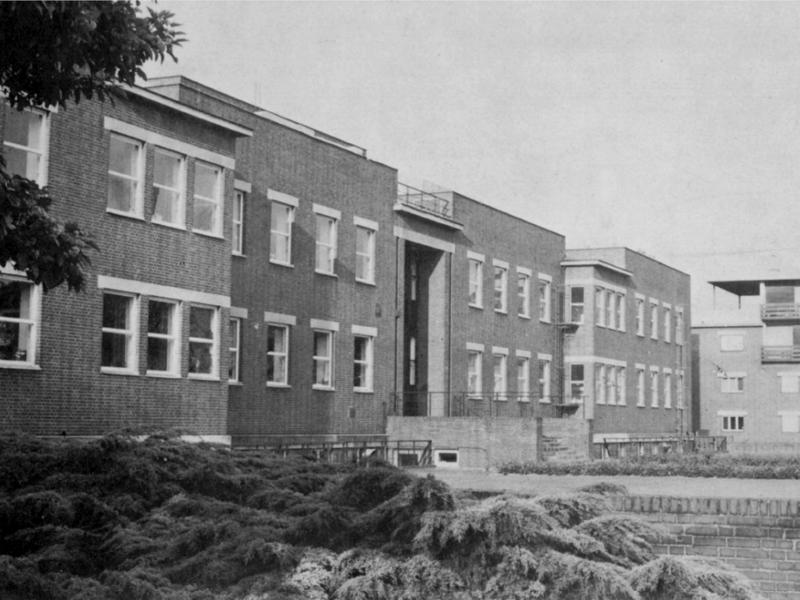
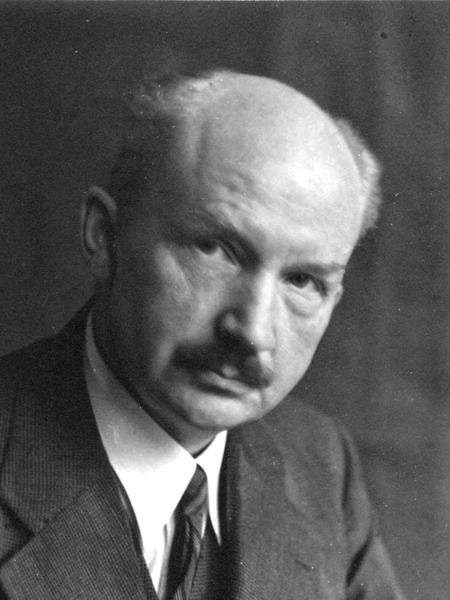
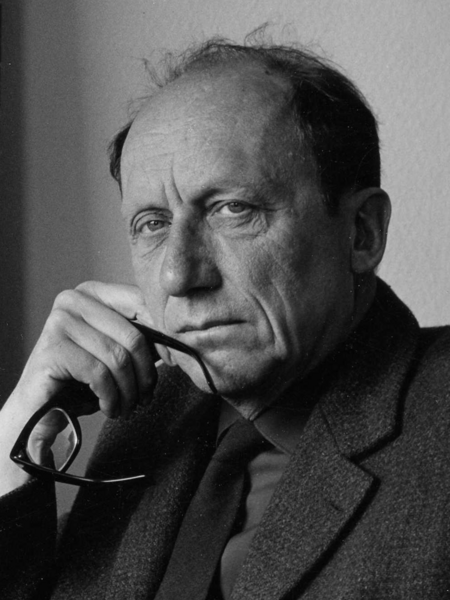
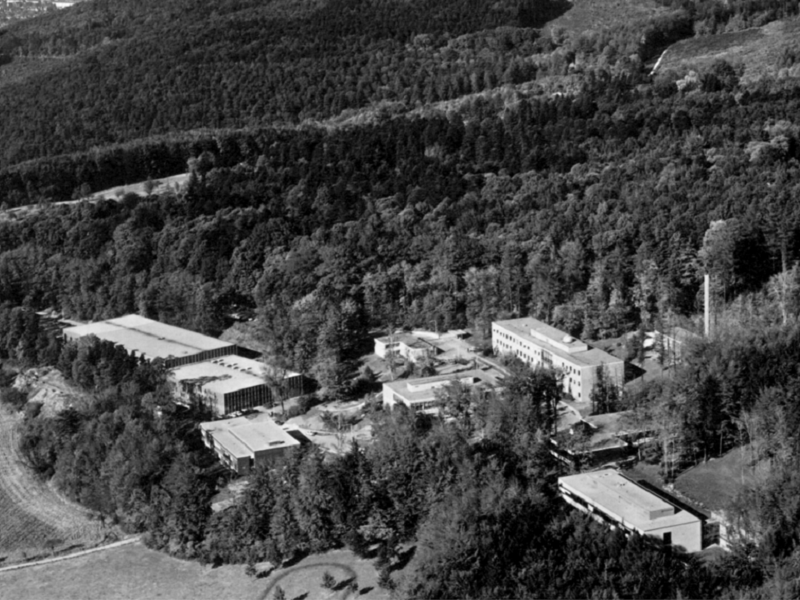
The Max-Planck-Institut für Kernphysik was founded in 1958 under the leadership of Wolfgang Gentner. Its precursor was the Institut für Physik at the Kaiser-Wilhelm/Max-Planck-Institute für medizinische Forschung led by Walther Bothe from 1934 to 1957. Since 1966 the MPIK is led by a board of directors. The initial scientific goals were to determine the structure of atomic nuclei and to understand the mechanism of nuclear reactions as well as the application of atomic- and nuclear-physics methods concerning questions in cosmochemistry. Today, the activities concentrate on two interdisciplinary research fields: the dynamics of atoms and molecules (quantum dynamics) and the crossroads of particle physics and astrophysics (astroparticle physics).
Research Facilities
The cyclotron of the precursor institute, built in 1943, was operated until 1973. The first tandem accelerator with 6 MV was constructed in 1961, followed in 1967 by the 12 MV tandem accelerator and was supplemented later by a postaccelerator and a high-current injector. In addition, since 1982 a 3 MV pelletron accelerator was in operation. End of 2012 the accelerators were decommissioned. Already in 1966, the first dust accelerator was deployed. The heavy-ion storage ring TSR was operational from1988 to 2012. The cryogenic storage ring CSR which has been designed from 2004 on, was first deployed in 2015. Since 2001, an electron-beam ion trap (EBIT) serves to produce and spectroscopically investigate highly charged heavy ions. Nuclear spectroscopy was done using, e.g., a crystal-ball spectrometer, and the fragments of nuclear reactions were investigated with a Q3D-magnetic spectrograph. Since 2001, atomic and molecular reactions are studied with reaction microscopes. In the 1968 built underground low-level-laboratory, detectors for extremely low count rates are developed and tested.
Except the tandem accelerators and the pelletron, all the research facilities and numerous further scientific instruments, especially the mass spectrometers, were and are, at least in part, developed in-house and built in the shops of the Institute.
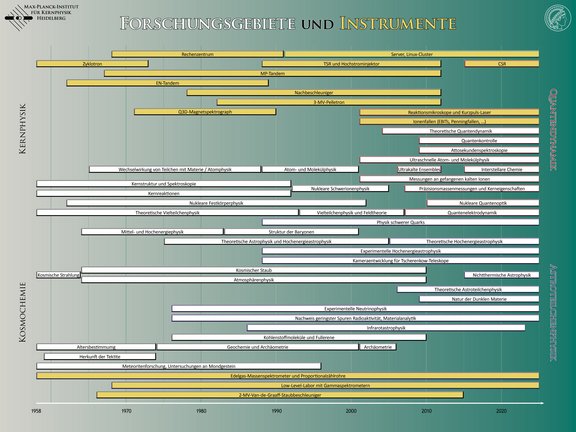
Research Highlights
1958 Discovery of the Mößbauer effect (recoilless nuclear spectroscopy with higher precision): Nobel Prize 1961.
1958 – 2000 Study of nuclear reactions with particle accelerators (cyclotron, tandems, CERN and DESY): determination of the inner shell structure, mechanism of nuclear reactions, structure of the nucleons.
1958 – 1962 Investigation of the beta decay of 8Li: discovery of the right-handed helicity of the antineutrino.
1958 – 1998 Semiconductor development by ion implantation into solid bodies.
1958 – 1980 Radioactive age determination and mineralogical investigation of meteorites, tektites (impact craters: e.g., Nördlinger Ries), lunar material and terrestrial rocks.
1962 – 1989 Structures in excitation functions of nuclei: Erikson fluctuations for proton scattering.
1964 – 2011 Atmospheric environmental research using mass spectrometers aboard rockets, balloons and aircraft as well as at the ground: discovery of the stratospheric background aerosol layer, characterization of the composition of polar stratospheric clouds.
1964 – 2011 Investigation of cosmic dust using satellite instruments (Giotto at the comet Halley, Galileo, Ulysses and the Cassini mission at Saturn).
1967 Definitive detection of the double beta decay by mass spectrometry, since then search for the neutrinoless double beta decay (Heidelberg-Moscow experiment, GERDA).
1968 – 2001 Theoretical many-particle physics, stochastic models and quantum chaos.
1973 – 2006 Archaeometry.
Since 1975 Theoretical astrophysics: formation of the solar system, propagation of cosmic radiation, compact objects.
1976 – 2010 Spectroscopic investigation of dust particles and clusters which possibly occur in the interstellar space; since 1984 linear carbon molecules.
Since 1976 Neutrino physics with the solar-neutrino experiments GALLEX/GNO and Borexino, the neutrino-oscillation experiment Double Chooz and high-energy neutrino astronomy with IceCube.
1977 – 2002 Determination of the concentration and distribution of trace elements in meteorites, lunar rocks, minerals and biological samples with the proton microprobe.
Since 1986 Infrared astrophysics: instrument development and data evaluation for the space telescopes ISO and Spitzer.
Since 1988 Development and operation of detectors for the experiments HERA-B and LHCb.
1988 - 2012 Atomic and molecular physics, laboratory astrophysics in the TSR.
1990 First preparation of fullerenes (C60) in chemically useful amounts, since then preparation of derivatives, polymers and endoheldral compounds of fullerenes.
Since 1990 High-energy gamma astronomy including theoretical work and the development of imaging Cherenkov telescopes (1992-1998 HEGRA on La Palma and since 2002 H.E.S.S. in Namibia, detection of numerous novel gamma sources).
1994 – 2006 Study of the unusual ozone isotopy.
Since 2001 Investigation of atomic reactions in collisions with charged particles or intense laser pulses (femtosecond lasers at the institute or the free-electron laser FLASH in Hamburg).
Since 2004 Theoretical quantum dynamics in strong laser fields and quantum electrodynamics.
2005 Discovery that plants emit methane under aerobic conditions.
Since 2006 Theoretical astroparticle physics, neutrino physics and cosmology.
2006 - 2012 Generation and investigation of ultracold quantum gases.
Since 2007 Precision measurements on stored and cooled ions, nuclear physics with atomic-physics methods.
Since 2009 Search for Dark Matter particles with liquid noble gases (xenon).
![[Translate to English:] Festschrift 50 Jahre MPIK (2008) (pdf)](/mpi/fileadmin/_processed_/1/4/csm_Umschlag_vorne_Geschichte_aa49bb59c5.jpg)