www.mpi-hd.mpg.de

Theory Division

Theoretical Quantum Dynamics and Quantum Electrodynamics

 

www.mpg.de
Research topics - Division Christoph H. Keitel
figure 1

Figure 1: As typical scenario, an electronic wave packet propagating according to Dirac's equation in an extremely intense laser pulse while being modified by highly charged ions and vacuum fluctuations.

The theoretical investigation of the interaction of matter with laser pulses by now has reached a level at which fundamental aspects such as the quantum nature of both light and matter, relativity and couplings among the involved particles have become key issues and substantial challenges alike. In this overview, our efforts are summarized towards a detailed understanding of the quantum mechanical interplay of all constituents of atomic, molecular, ionic and nuclear systems with laser fields. At the most fundamental level, the quantum nature generally requires the solution of the electronic wave packet dynamics via the Schrödinger or Dirac equation and in many cases also the quantization of the environmental vacuum (see Fig. 1). Besides the intuitive understanding of such processes in laser pulses we equally aim at optimizing various applications such as laser-assisted cooling or particle acceleration, generation of coherent high-frequency light, or creation of new particles.

Theory of Collective and Relativistic Quantum Dynamics in Strong Laser Fields

When intense laser fields interact with matter, the behavior of the electrons plays a prominent role, because these, being light charged particles, strongly couple to the outer field and thus efficiently absorb energy from the field. Thereby they can become so fast that the effects of the theory of special relativity play an important role. This requires the search for solutions of the time-dependent Schrödinger and Dirac equations, including in many cases the mutual interaction among the various involved electrons or nuclei. With new light sources such as the x-ray free electron laser (XFEL) and efficient acceleration facilities coming into reach, also nuclear quantum dynamics is becoming increasingly relevant.

Collective Atomic Quantum Dynamics

figure 2

Figure 2: Scheme of two-center dielectronic recombination. Shown is the first step where an electron is captured at one atomic center with simultaneous excitation of a neighboring atom via resonant electron-electron interaction.

Electron-electron correlations play an important role for the time evolution of matter on a microscopic scale. In particular, when an atom is not isolated in space but close to another atom, the electrons at the two centers can be coupled by long-range electromagnetic interactions causing a variety of interesting phenomena. Prominent examples are de-excitation processes such as Penning ionization in slow atomic collisions, interatomic Coulombic decay of inner-valence vacancies in clusters, energy transfer in quantum optical ensembles, and so-called Förster resonances in biomolecules.
In a joint collaboration with members of the experimental quantum dynamics division Carsten Müller and coworkers have recently generalized the fundamental process of dielectronic recombination to the case where two atomic centers participate. In this situation, an electron is captured at one center with simultaneous excitation of a neighboring ion, atom or molecule which subsequently decays via photo-emission (see Fig. 2). It is remarkable that this resonant two-center process can largely dominate over single-center radiative recombination at internuclear distances as large as several nanometers. Two-center dielectronic recombination may therefore be of general relevance in (bio)chemical and dense plasma environments where it can substantially affect the quantum dynamics of the system.

Once atomic ensembles are engaged with intense laser fields, collective effects are especially mediated via the ionized electrons. Those electrons which initially remain bound may still tunnel out off the ionic core and return to their parent atom due to the applied oscillating force. Among various processes which can occur in such laser-driven electron-ion recollisions, the electron can recombine with the ionic core and release its energy by emitting a high-frequency photon. This way, coherent ultrashort, i.e. possibly attosecond, xuv and soft x-ray pulses can be produced, offering promising prospects for time-resolved studies of inner-shell electron motion in atoms. However, progress in this field appears to have reached a limit. The development of table-top coherent radiation sources in the hard x-ray domain requires new approaches. Most importantly, limitations on the achievable photon energies are imposed by the onset of relativistic effects in the electron motion in the super-strong driving laser fields. The second point hindering high-order harmonic generation at high laser intensities is the phase-matching problem due to a large free electron background. Generating relativistic harmonics means mastering both challenges: circumventing the relativistic drift and coping with the phase mismatch. Rather than to address this two problems step-by-step, the team around Karen Hatsagortsyan has proposed a novel approach to overcome both of these fundamental problems simultaneously. Employing a setup with two counter-propagating attosecond pulse trains the relativistic drift, which is responsible for suppression of harmonic generation, is reverted. Moreover, the harmonic field emitted in this setup has an additional intrinsic phase depending on the time delay between the pulses which allows for compensating the phase mismatch between the driving laser field and the emitted harmonics due to the free electron background. The proposed setup renders the relativistic regime of high-order harmonic emission in a multi-atom ensemble accessible. Our goal is the development of feasible schemes for coherent hard x-ray production which would enable, for instance, time-resolved nuclear spectroscopy.

Much attention has also been placed on laser-matter interaction in gases where many-body effects play a somewhat smaller role. This includes means of extending the plateau of high harmonic generation jointly with Christian Buth via applying XFEL pulses along with the strong field or employing very high harmonics for generating ultra short pulses. Moreover in a joint cooperation with Thomas Pfeiffer's team the concept of harmonic generation has been generalized to include free-free harmonics: wave packet splitting or spreading, subsequent simultaneous recollision with different energies and core-mediated transition with photoemission at the difference energy. In addition a lack of the understanding of strong field physics due to peculiar low-energy structures in recent experimental harmonic spectra has been clarified. In particular Karen Hatsagortsyan's team showed that multiple scatterings may play a decisive non-perturbative role, leading to those until then unexpected low-energy structures. Finally the details of understanding relativistic quantum dynamics are explained with sophisticated parallel Dirac propagation codes by scientists around Heiko Bauke.

Collective Nuclear Quantum Dynamics

figure 3

Figure 3: (a) Setup to generate keV entanglement by coherently controlling the cooperative light scattering of x-ray radiation on an ensemble of nuclei. The control is achieved via a magnetic field acting on the nuclear sample, indicated by the round magnetic coils. The interferometer allows detecting of entanglement via a correlation measurement. (b) The inset shows how the spatial coherence leads to unidirectional scattering already for 100 nuclei in a volume of 10 wavelengths cubed. The distance from the origin indicates the probability of emission in the corresponding direction.

The great success of quantum optical methods with atoms in the optical frequency regime prompts the question whether similar techniques could also be applied to nuclei. This on the one hand would promote preparation, control, and detection in nuclear physics, but on the other hand would open the door for coherent and non-classical effects in x-ray science. Upcoming free electron laser facilities will enable a direct driving of nuclear transitions, but interestingly, operating synchrotron radiation sources allow for the implementation of quantum optical schemes in nuclei already today. In particular, the coherent forward scattering of light on iron nuclei is a promising implementation of cooperative light scattering, exhibiting collective effects like super- and subradiance, and directed light emission due to spatial coherence. Based on experimentally verified techniques, scientists around Jörg Evers and Adriana Pálffy showed that the cooperative light scattering on nuclei can be coherently controlled in such a way that entangled light in the keV energy regime is generated, see Fig. 3. Due to the incoherent nature of the light source and the low linewidth of the nuclei, essentially a single x-ray photon is absorbed by the large ensemble of nuclei, thus forming an excitonic state. The cooperative coherent emission of this excitonic state preferentially proceeds in forward direction, with a superradiant decay enhancement in particular in the initial phase of the decay. By rapidly changing the direction of an applied magnetic field throughout the lifetime of the excitonic state, destructive interference among the different decay channels can be induced, effectively inhibiting the cooperative coherent decay. This mechanism is in direct analogy to electromagnetically induced transparency in atoms. A more advanced magnetic field switching scheme allows splitting the single excitation into two modes, thus creating an entangled state of the scattered light. This paves the way for x-ray science towards the quantum realm, and could lead to quantum-assisted measurements in the x-ray range.

figure 4

Figure 4: Temporal evolution of the quark-gluon plasma. (a) shows the time immediately after the collision of two ions (colored disks). The plasma (orange area) shines light (wavy arrows) in all directions, so that a first pulse in the direction of the detector (green semi-circle) is formed. (b) After some time, the inner dynamics of the plasma will cause light to be preferentially radiated perpendicular to the direction of flight of the ions. During this time no light is emitted into the direction of the detector. In (c) the plasma radiates again in all directions, so that the second pulse is emitted in the direction of the detector.

Even higher energy scales can be accessed in heavy-ion collisions. In modern colliders, a so-called quark-gluon plasma (QGP) can be created, which is a state of matter similar to that of the universe right after the big bang. In this state, the temperatures are so high that even the constituents of atomic nuclei, the neutrons and protons, are split into their constituents, the quarks and gluons. The QGP is created for a few yoctoseconds (ys) at the size of a nucleus. Among many other particles, the QGP also emits gamma-rays of a few GeV in a pulse of only ys duration. Jörg Evers' team has simulated the time-dependent expansion and internal dynamics of the QGP and found that at some intermediate time the photons are not emitted in all directions, but preferably perpendicular to the collision axis. Thus, a detector placed close to the collision axis will measure a double pulse emitted from the QGP (Fig. 4). By suitable choice of geometry of the setup and observing direction, the double pulses can in principle be selectively varied, which opens up the possibility of future pump-probe experiments in the ys range at high energies. This could lead to a time-resolved observation of processes in atomic nuclei. Conversely, a detailed analysis of the gamma-ray flashes would offer information on the dynamics of the QGP.

In a different direction, coherent population transfer in nuclei would be a powerful tool for preparation and detection in nuclear physics, especially for control of energy stored in long-living excited nuclear states. The transfer of atomic quantum optics schemes to nuclear systems has been waiting for the advent of new coherent x-ray sources such as the x-ray free electron laser (XFEL), now operational at LCLS in Stanford and soon also at DESY in Hamburg. The incentive is substantial not least due to the existence of nuclear isomers - long-lived excited states that can store large amounts of nuclear energy over long periods of time and when properly controlled could perhaps develop to nuclear batteries.

figure 5

Figure 5: (a) The relevant nuclear scheme for 97Tc. The initial nuclear population is concentrated in the isomeric state 1. The pump laser P drives the transition from 1 to 3, and the Stokes laser S drives the transition 2 to 3, resulting in coherent population transfer between states 1 and 2. (b) Two partially overlapping x-ray laser pulses P (pump) and S (Stokes) interact with relativistically accelerated nuclei. The Doppler effect ensures that both nuclear transitions are in one-photon resonance with the laser pulses generated by a two-color XFEL.

Envisaging XFEL laser pulses with high photon energy in resonance with two nuclear transitions, one can exploit coherence effects to achieve nuclear population transfer in a nuclear three-level system as depicted in Fig. 5. This is a typical three-level scheme that can lead to the depletion of an isomeric state, via transitions to and from an upper triggering level. Pálffy and coworkers investigate how two properly chosen overlapping laser pulses can produce a coherent population transfer from the isomeric state to another nuclear level whose decay to the nuclear ground state is no longer hindered by the long-lived isomer and occurs very fast. If necessary, the photon energies can be tuned to the nuclear transition energies by exploiting the Doppler effect with accelerated nuclear beams, as shown schematically in Fig. 5.

Quantum control via coherence and interference

figure 6

Figure 6: : a) Schematic drawing for an artificial atom coupled to a nanomechanical resonator. The resonator is embedded in a superconducting circuit loop which includes three Josephson junctions. b) Relevant level scheme. |g> and |a> are states of the qubit, and |n> are motional states of the resonator. Due to quantum interference, the unwanted transition from |g,n> to |a,n> effectively leading to heating is cancelled.

A particularly powerful approach to control quantum systems is to exploit coherence and interference effects. These techniques are particularly well developed for atoms exposed to moderately strong resonant laser fields. A key effect is electromagnetically induced transparency (EIT), which allows rendering an opaque atomic medium transparent by shining in a suitably chosen control laser field. Based on EIT, it is possible to control the propagation of light through atomic media to great extend. Jörg Evers and his team have studied such light propagation under conditions in which both the electric and the magnetic components of the propagating field couple to the atoms, and could show that the magnetic field component can crucially influence the system dynamics already at experimentally accessible parameter ranges despite its weak coupling. These setups are also of relevance for the generation of a negative index of refraction in atomic media. The group further studied light propagation in denser atomic gases, in which the interaction between the atoms leads to a characteristic phase modulation imprinted on the propagating light beam. This cooperativity-induced modulation in contrast to nonlinear effects is present already for weak propagating fields, which is of importance for all-optical communication and computing devices.
The transition between the quantum and the classical world is a long-standing question in physics, and one way of addressing it is the study of extended objects which still exhibit quantum effects. For example, a number of current experiments attempt to cool the motion of microscopic oscillators to the quantum mechanical ground state. Evers' group has shown that such cooling can be improved using coherence and interference effects. Their model system is a so-called artificial atom, which are qubits constructed from a superconducting circuit loop interrupted by Josephson junctions, see Fig. 6. This setup in some sense acts like an atom, and different states can be visualized, e.g., as currents circulating in clockwise or anti-clockwise direction through the circuit. The micromechanical oscillator is embedded in the loop, and couples to the circulating currents as the mechanical motion changes the size of the oscillator loop. They could show that using EIT, the qubit can be tailored in such a way that unwanted heating processes are suppressed by quantum interference. This allows cooling of the resonator in its ground state over a much larger parameter range, and in particular also in the so-called non-resolved regime. In another setup, improved cooling dynamics is achieved by coupling a single resonator to two interacting qubits. The coupling of the qubits leads to the formation of sub- and superradiant states, and the coupling of the resonator to these cooperative states gives rise to improved cooling dynamics.
The direct interaction between two quantum particles is also of interest in its own right, not least since it is a building block for many-body quantum dynamics. Evers' team showed that two coupled qubits can be coherently controlled such that entanglement between them is created in a robust way. The coupling can also induce additional coherence which can act as resource for further control schemes, and allows to measure the distance between quantum particles on a nanoscopic scale using optical far-field detection only – even if the alignment of the particles is unknown. Group members around Mihai Macovei further showed that many-particle ensembles of interacting particles can be controlled such that they act as versatile sources of non-classical light.

figure 7

Figure 7: Fluorescence photon spectrum for the 2s-2p3/2 transition in lithiumlike 209Bi. Red dashed line: the broad spectrum with x-ray driving between levels 1 and 3 (see panel a). Blue line: the narrowed spectrum when an optical laser driving between the hyperfine-split levels 1 and 2 is switched on in addition (see panel b).

Quantum control schemes may also be applied at higher photon frequencies. The typical transitions of highly charged ions are in the x-ray range, which may be addressed by modern free electron laser facilities. The energy spectrum of the emitted (fluorescent) x-ray radiation can be tailored by applying an additional laser driving in the optical regime. In particular, recent relativistic simulations by the group lead with Zoltán Harman have shown that the line widths of the fluorescence spectrum can be almost arbitrarily decreased, as illustrated on Fig. 7. This scheme provides in principle a new tool to measure the properties of such ions to an unparalleled accuracy.

Laser-Modified Quantum Electrodynamics and High-Energy Processes

Quantum Electrodynamics (QED) is among one of the most successful physical theories and their predictions have been confirmed experimentally with great accuracy. However, there are still areas and aspects of QED, in fact even of classical electrodynamics (CED), which have not yet been thoroughly theoretically and experimentally explored. Various teams around Antonino Di Piazza and Carsten Müller investigate theoretically the possibility of testing CED and especially QED in these rather unexplored areas by means of ultra-strong laser fields. In addition also the structure of the vacuum is described in the framework of quantum electrodynamics (QED) such that atoms and ions are modified in this environment. Along with our experimental colleagues at the Institute in the team with Zoltán Harman such phenomena are investigated with high precision.

High-Precision Quantum Electrodynamics

figure 8

Figure 8: Resonant two-step photoionization of a highly charged ion by an x-ray photon. The photon excites the electronic state, which subsequently autoionizes.

With the aid of quantum electrodynamics, it is possible to calculate the inner structure of matter (e. g., of highly charged ions) with high precision. Highly charged ions provide an important tool for basic research in quantum electrodynamics and relativistic atomic structure theory at extreme fields and for the investigation of effects of the atomic nucleus on the electron shell. Accurate knowledge of the structural and dynamical properties of highly charged ions – e. g. transition energies, lifetimes of excited electronic states, recombination and photoionization cross sections – is also necessary for the simulation and diagnostics of nuclear fusion plasmas and hot astrophysical plasmas. In particular, resonant recombination processes are known as a source of severe energy losses from high temperature tokamak plasmas, and, thus, a precise quantitative understanding of such phenomena is indispensable. Also, it has been shown in astrophysical observations that highly charged ions present in the warm-hot intergalactic medium are resonantly photoionized by x-rays emitted by matter disappearing behind the event horizon of a black hole (see Fig. 8). Therefore, the analysis of astrophysical spectra recorded by space observatories necessitates the thorough theoretical and experimental understanding of resonant x-ray photoionization, and allows one to determine physical and chemical properties of the intergalactic medium. Theoretical results of team members around Zoltán Harman and Adriana Pálffy are scrutinized with precision experiments in ion traps (groups Blaum and Crespo/Ullrich) and in the storage rings of the MPIK and the GSI. The combination of experimental and theoretical efforts also provides new methods for the measurement of nuclear properties via atomic physics experiments, e. g. the determination of nuclear charge radii from atomic isotope shifts. Furthermore, processes at the interface between atomic and nuclear physics such as nuclear excitation by electron capture in highly charged ions may provide an alternative mechanism to deplete isomers and render nuclear batteries possible. In another direction, very accurate calculations of bound states in highly charged ions are the basis for the determination of natural constants with a relative accuracy of 10-14. In such calculations, the strong electromagnetic fields within the systems under consideration are playing a crucial role.

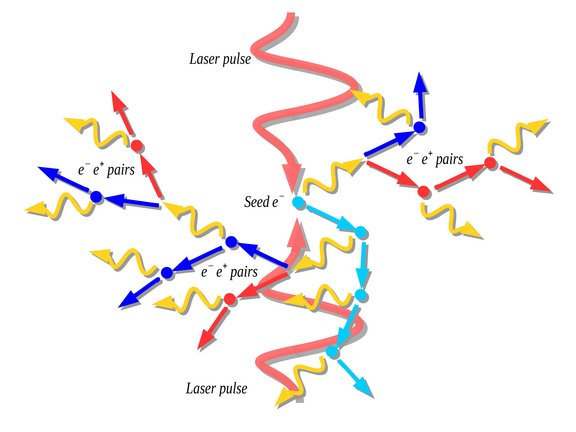
High-precision QED is also applicable to scenarios with high spatial and temporal resolution. The developing attosecond technique allows for controlling the motion of electrons on the atomic scale and to measure inner-shell atomic dynamics with typical energies up to the hundreds of electronvolt and time resolution of several tens of attoseconds. The next challenge of time-resolving the inner-nuclear dynamics, or more generally, the dynamics of systems governed by the strong interaction requires gamma-rays below attosecond duration and with energies exceeding the MeV range as well as tools for their characterization. But already at moderately short timescales of femtoseconds to attoseconds, at present no detection schemes are available to actively probe intermediate stages of fundamental processes at the MeV-GeV energy scale. Group members around Karen Hatsagortsyan have developed a detection scheme for characterizing high-energy gamma-ray pulses down to the zeptosecond timescale which is denoted "Streaking at High Energies with Electrons and Positrons" (SHEEP). In contrast to existing attosecond metrology techniques, the method is not limited by atomic shell physics and therefore capable of breaking the MeV photon energy and attosecond time-scale barriers. It is based on the high-energy process of electron-positron pair production in vacuum through the collision of a test pulse with an intense laser pulse. Although pair production has already been observed experimentally in a benchmark experiment at SLAC, SHEEP could be the first viable application for this strong field QED process, i.e. by exploiting it as a measurement tool.

From Classical to Quantum Radiation Reaction

figure 9

Figure 9: An electron (black straight lines) enters a laser field (in red) and emits many photons incoherently (black wavy lines). The recoil felt by the electron at each emission corresponds to classical radiation.

It seems that the fundamental question "what is the equation of motion of a charged particle in a given external electromagnetic field?" has not yet received a definite, experimentally verified answer. When a charged particle (an electron, for definiteness) moves in an electromagnetic field, it is accelerated and it emits electromagnetic radiation. One of the oldest and still unsolved problems in CED is the so-called radiation reaction problem, i.e. the determination of the equation of motion of an electron by including self-consistently the effects of the emitted radiation on the electron motion (radiation reaction). In the teams with Di Piazza and Hatsagortyan we have shown that intense laser fields can help in giving a definite answer to this question, providing sufficiently strong fields to test experimentally the underlying equations taking into account radiation reaction. On a more fundamental side, the question arises: "what is the quantum origin of radiation reaction". We have also investigated this question, identifying quantum radiation reaction in the multiple incoherent emissions of photons by the electron driven by an external field (see Fig. 9). We have also found a radiation regime where both quantum and radiation-reaction effects strongly dominate the electron dynamics and which can be entered via already available lase systems.

The interaction of very intense laser pulses with many particle plasma targets is also investigated by the team around Antonino Di Piazza using relativistic, 3D, electromagnetic particle-in-cell simulations so that the complete physics of the complex plasma dynamics and the self-consistent laser pulse propagation is captured. Here special attention was placed again in adding radiative reaction into the particle-in-cell codes. Employing such extended code, ion and electron acceleration were investigated and it was pointed out that radiative reaction can narrow the energy resolution of both the accelerated electron and ion distributions.

Vacuum Physics

figure 10

Figure 10: A typical double-slit setup: a probe beam (in green) collides with two counterpopagating strong laser beams (in red) and its photons are vacuum-scattered, building up an interference pattern analogous to those observed in conventional double-slit experiments.

The principles of quantum mechanics and special relativity allow for the existence in the vacuum of "fluctuations" of virtual electrons and positrons, which create and annihilate after covering a distance of the order of the Compton wavelength λc=3.9*10-11cm. These virtual particles can mediate a pure quantum interaction between photons in the vacuum. Under certain approximations it is possible to describe this interaction via a nonlinear "effective" Lagrangian, known as Euler-Heisenberg effective Lagrangian. Starting from the Euler-Heisenberg effective Lagrangian, we have investigated different processes like the generation of high harmonics in the collision in vacuum of two ultra-strong laser beams or the diffraction undergone by an x-ray probe when it passes through an intense optical standing wave. Moreover, we have shown the possibility of exploiting the vacuum-mediated interaction among laser beams to put forward a matterless double-slit setup (see Fig. 10). All the double-slit setups proposed had always involved material parts like massive "probe" particle (electrons, neutrons etc...) or the walls where the slits are. By means of rendering two parallel strong beams to collide with a counterpropagating probe field, the photons of the latter can be scattered by either one or the other strong beam and they produce a typical double-slit diffraction pattern with alternating maxima and minima.

Strong-field QED

Experimental limitations have so far prevented the possibility of thoroughly investigating the interaction of electrons, positrons and photons in the presence of background electromagnetic fields of the order of the so-called "critical" fields of QED: Ecr=1.3*1016V/cm and Bcr=4.4*1013 G. A constant and uniform electric field of the order of Ecr is able to provide an electron and a positron of energy of the order of their rest energy within a distance of the order of the Compton wavelength λc. This is in turn the typical distance covered by a virtual electron-positron pair in vacuum. Therefore, the vacuum in the presence of such a strong electric field becomes unstable and electron-positron pairs are spontaneously produced. A linearly polarized laser field with an amplitude of the order of Ecr, would have an intensity Icr of about 2.3*1029W/cm2. Present laser systems are able to produce electromagnetic fields of unprecedented intensities of the order of 1022 W/cm2 and future facilities like the Extreme Light Infrastructure (ELI) and the High Power laser Energy Research (HiPER) aim at laser intensities exceeding 1025 W/cm2. Although the intensity Icr seems to be out of reach in the near future, the experimental investigation of strong-field QED is still possible. In fact, if an ultra-relativistic electron with energy η collides head-on with a strong laser beam with electric field amplitude E, the strong-field QED effects scale roughly with the parameter χ=2(ε/mc2) (E/Ecr), where mc2 is the electron rest energy. Therefore, by employing ultra-relativistic electron beams and intense laser fields, it is possible to render the parameter χ of the order of unity or larger, and test the predictions of QED under such extreme conditions.

Indeed, the first and so far unique experimental observations of laser-induced nonlinear Compton scattering and pair creation in the late 1990s have relied on the high-energy electron beam at the Stanford Linear Acceleration Center in conjunction with a counter-propagating intense laser pulse. C. Müller and coworkers have recently provided a complete QED treatment of this kind of electron-positron pair creation from vacuum, this way filling a long-standing gap in the theory of strong-field QED phenomena. Our approach treats the relevant pair creation mechanisms involved in a unified manner. We have shown that the Stanford experiment observed weakly nonperturbative signatures. Moreover, according to our predictions, the fully nonperturbative domain of the process via tunneling could be realized today within all-optical setups where the incident high-energy electron beam is generated by laser-acceleration devices.

Electron-positron pair production by pure laser light – for example, in the field of two counter-propagating laser pulses – belongs to the most fascinating predictions of QED. In this process, pure electromagnetic energy is transformed into matter. Moreover, Rabi oscillations between the negative and positive-energy Dirac continua take place, leading to resonances at certain field frequencies. With regard to future experiments, the process is mainly discussed in connection with the upcoming XFEL sources. At high frequencies, however, the question about the importance of the laser magnetic field component arises which has been neglected in all calculations until now. By employing advanced computational methods we have demonstrated that inclusion of the laser magnetic field strongly modifies the pair production dynamics in this case: the resonance positions are shifted, several new resonances occur, and the resonance lines are split. The underlying reason for all these effects is that – in contrast to an oscillating, purely electric field – the photons in the counterpropagating laser pulses carry momentum along the beam axis, which is transferred to the electron and positron upon absorption. Furthermore, the line splitting finds its natural explanation by an Autler-Townes-like effect as known from the physics of atoms in external fields.

figure 11

Figure 11: The angular distribution of photons (in blue) emitted via multiphoton Compton scattering by an ultra-short, strong laser pulse (in red) can be employed to infer the temporal structure of the laser pulse itself, for example its carrier envelope phase.

In addition, for χ of the order of unity or larger, very exotic and appealing effects may happen, like the fusion of laser photons in the collisions with a proton or the splitting of a photon into two after passing through a strong laser beam. Moreover, the team around Antonino Di Piazza has shown that strong-field QED effects like multiphoton Compton scattering can be employed as a diagnostic tool. For example, the precise shape of the electric field of an intense, ultra-short laser beam can be inferred via the angular distribution of the photons emitted by an electron passing through the beam (see Fig. 11).

Laser Acceleration, Laser Colliders and Particle Physics

Various schemes are put forward to accelerate electrons to energies up to the GeV range. According to theoretical calculations performed recently, linearly or radially polarized, tightly focused and thus extremely strong laser beams should permit the direct acceleration of light atomic nuclei over micrometer-sized distances up to energies that may offer the potential for medical applications.

Beams of accelerated bare nuclei have been used worldwide to treat cancer. A unique property of such particles is the well-defined position in the body where they deposit their energy, allowing a precise irradiation of malicious tumors while sparing the neighboring healthy tissue. The nuclei are accelerated mainly by conventional accelerators, which are physically large and expensive. Using a laser system to accelerate the particles may result in a cut on the cost and physical space and may thus render cancer therapy available for a wider range of patients.

figure 12

Figure 12 (left): Ion trajectories (blue) calculated by a simulation of the acceleration in the focus of a radially polarized laser beam. The red arrows illustrate the radial and longitudinal field vectors and the propagation direction of the beam. (right): Post-acceleration of an ion beam generated in a laser-plasma interaction process by two crossed lasers.

In the group led with Zoltán Harman we perform model calculations to investigate how particle beams with the properties required for medical applications can be generated and accelerated by laser fields. Our simulations show that linearly and radially polarized multi-terawatt and petawatt laser beams, bundled to a focus smaller than the wavelength of the laser light, can directly accelerate protons and carbon nuclei to the high kinetic energies required. Another key issue for the medical applicability of the beams thus generated is how well-defined the energy of the particles is. We found that tightly focused lasers produce particle beams with energy uncertainties close to those demanded for medical purposes. Radially polarized laser fields can generate ion beams of somewhat higher quality than their linearly polarized counterparts (Figure 12, left). In a different setting employing two identical crossed laser beams, ions originating from a laser-plasma process can be efficiently post-accelerated to form a beam of high intensity, energy and quality (Figure 12, right).

figure 13

Figure 13: Setup of the miniature electron-positron collider based on laser-driven positronium atoms. Exposed to the strong fields of two counterpropagating laser pulses (red), a positronium atom is ionized and the electron and positron (blue) are driven into an annihilating recollision. This way, a muon-antimuon pair (green) can be created, for instance, as indicated by the corresponding Feynman diagram.

When electrons are exposed to the most intense laser fields available today, they may gain very high kinetic energies which are meanwhile reaching the GeV range, with proposals towards the TeV range. Laser acceleration is therefore of great interest regarding alternative concepts of future particle colliders. In particular, when an electron is released from an atom in an intense laser field, it is afterwards driven back and forth by the laser field and may finally recollide with its parent ion. At very high laser intensities, however, the electron is driven away from the atom by the "light pressure", preventing the recollision. For certain "exotic" atoms like positronium, this effect can be circumvented. Because of the identical drift motion of electron and positron, repeated highly energetic recollisions take place: The system represents a miniature collider, which allows the generation of new particles from the collisional energy. For example, muon-antimuon pairs can arise from this recollision process (Figure 13).

With team members around Karen Hatsagortsyan and Carsten Müller, we have continued our studies of the laser-driven micro-collider which is based on a dense target of positronium atoms combined with very strong laser beams. Apart from the high collision energies attainable, also high collision luminosities can be obtained in this setup. In order to guarantee the latter, it is important to control the relativistic quantum dynamics of the colliding particles. Application of two counter-propagating strong laser pulses represents a promising route towards the required quantum control in the high-energy domain. By detailed simulations we have optimized the collisions with respect to the laser field polarization, the carrier-envelope phase and the beam focusing parameters. In particular it was shown that driving fields of linear polarization have significant advantages over circularly polarized fields since they allow for higher luminosities and larger utilizable positronium samples. After the creation of muon-antimuon pairs in laser-driven electron-positron collisions has already been analyzed, we are now turning our considerations towards heavier collision products.

Lepton-antilepton pairs and charged pion pairs can also be generated in nonlinear processes involving the absorption of several gamma photons in the field of an atomic nucleus. These reactions have been shown to be realizable by utilizing the ultrarelativistic ion beam at the Large Hadron Collider in conjunction with intense attosecond or x-ray laser sources. As a consequence extremely strong laser pulses are not only of relevance for nonlinear quantum electrodynamics but also for hadronic and particle physics.


group homepage Group Homepage